What Is GEO (Generative Engine Optimisation)? How to Make Your Business Visible in AI Search

Table of Contents
- 1. A New Visibility Problem Has Emerged
- 2. What GEO Actually Is
- 3. GEO, SEO, AEO, and AIO — What Is the Difference?
- 4. Why AI Systems Cite Some Businesses and Not Others
- 5. 1. Crawlability
- 6. 2. Content clarity
- 7. 3. Factual specificity
- 8. 4. Entity relationships
- 9. 5. Authority and citation patterns
- 10. 6. Structured data
- 11. 7. Content that answers questions directly
- 12. The Five AI Engines That Matter Most in 2026
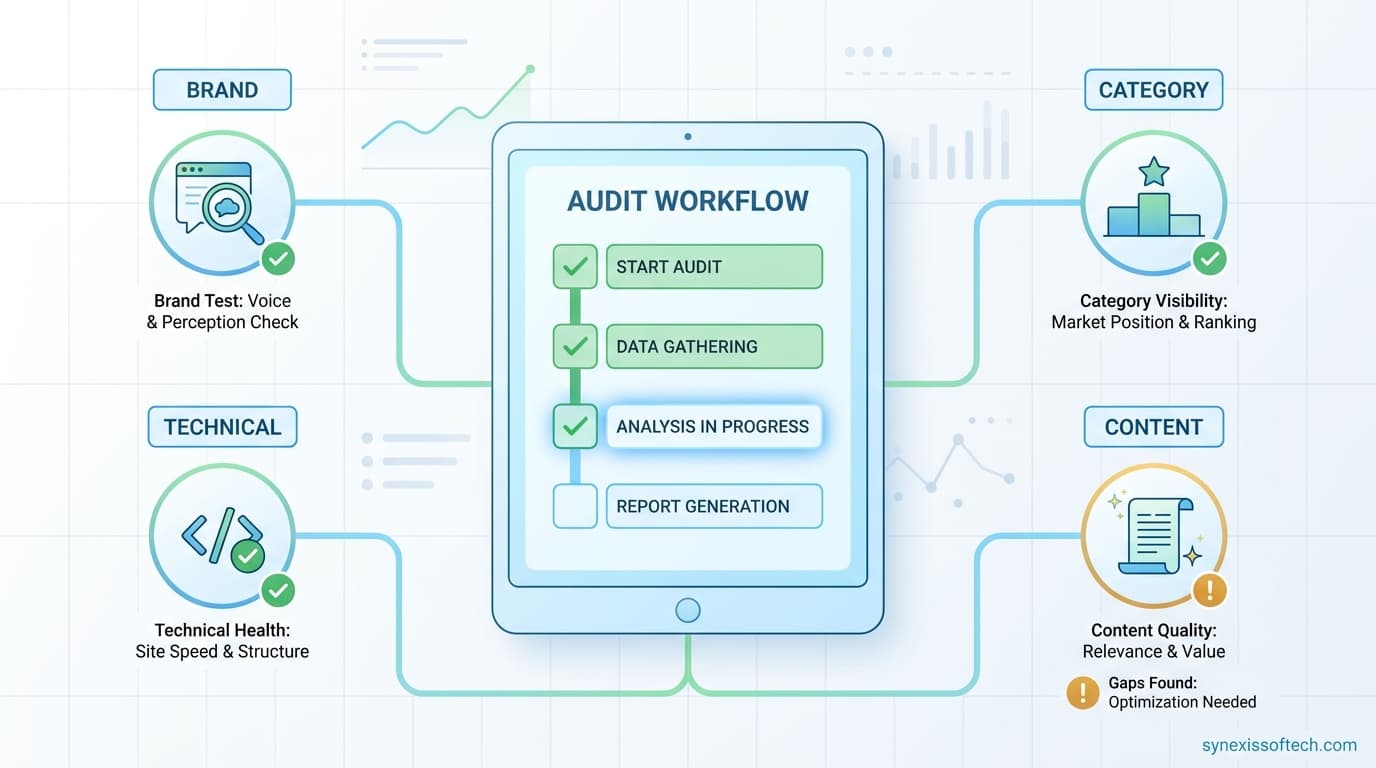
- 13. How to Test Your Current AI Visibility
- 14. Test 1: Category query
- 15. Test 2: Brand query
- 16. Test 3: Buyer intent query
- 17. Test 4: Perplexity check
- 18. Test 5: Google AI Overviews check
- 19. A Practical GEO Action Plan
- 20. Step 1: Fix your robots.txt
- 21. Step 2: Create an llms.txt file
- 22. Step 3: Audit and rewrite key pages for extraction
- 23. Step 4: Add structured data
- 24. Step 5: Build entity clarity
- 25. Step 6: Create citation-worthy content
- 26. Step 7: Build external mentions
- 27. GEO Is Not a One-Time Fix
- 28. How Synexis Softech Can Help
- 29. Frequently Asked Questions
- 30. What is GEO in marketing?
- 31. Is GEO the same as SEO?
- 32. How do I check if my business appears in ChatGPT answers?
- 33. What is an llms.txt file?
- 34. How long does GEO take to show results?
- 35. Does GEO replace paid advertising on ChatGPT?
A New Visibility Problem Has Emerged
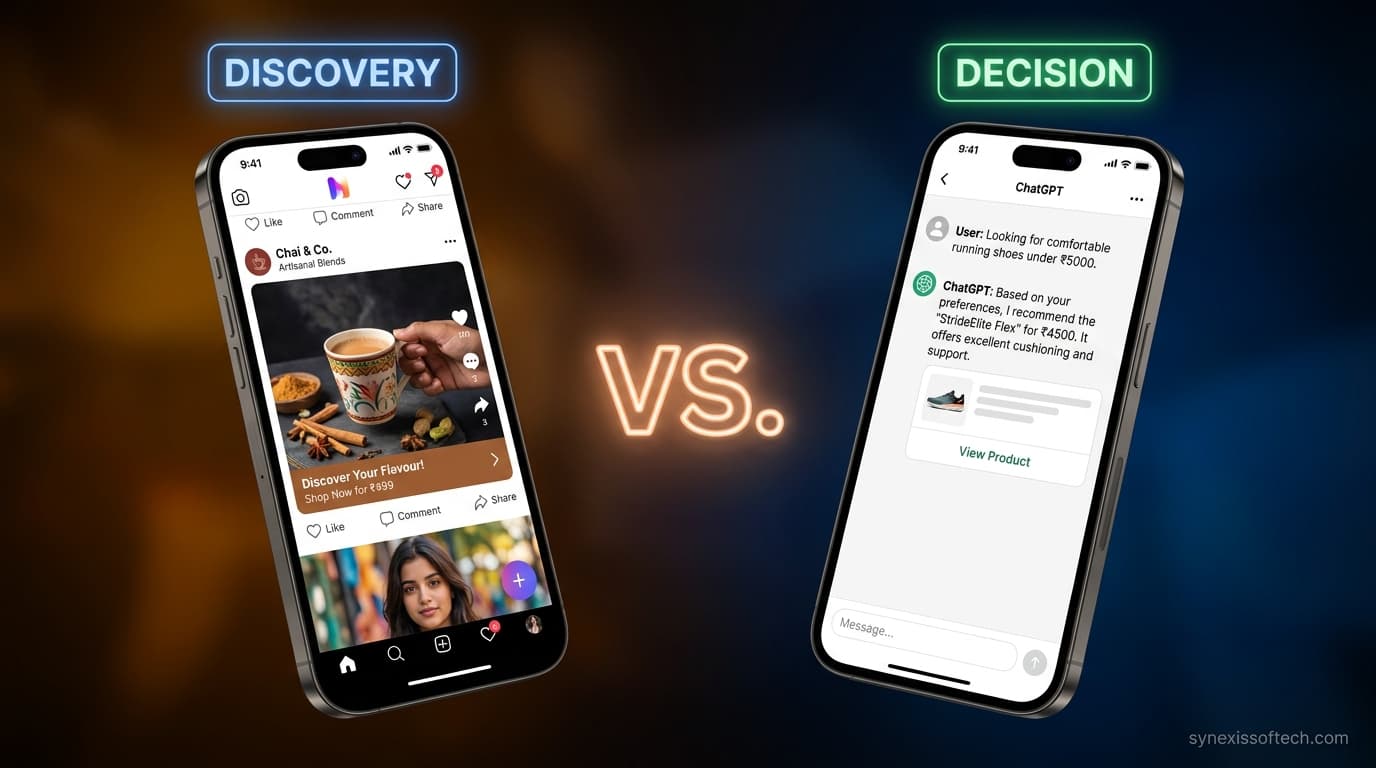
Your business ranks on Google. Your website gets traffic. But when a potential customer opens ChatGPT and asks for a recommendation in your category, a competitor is named — and you are not.
This is not a Google problem. It is a GEO problem.
GEO stands for Generative Engine Optimisation — the discipline of improving how AI-powered answer engines understand, trust, and cite your business. It is the AI equivalent of SEO, and in 2026 it has become as commercially relevant as traditional search ranking.
What GEO Actually Is
When a user asks ChatGPT, Perplexity, Google Gemini, or Microsoft Copilot a question, the AI generates an answer. That answer is built from sources the AI has crawled, indexed, and judged credible. In many cases, it cites those sources directly — linking to articles, businesses, or product pages that informed the answer.
GEO is the practice of making your business one of those sources. It involves:
Ensuring AI systems can crawl and understand your content
Structuring your content so it can be extracted and quoted accurately
Building the authority signals that make AI systems trust your information
Creating the factual, entity-rich content that AI systems prefer to cite
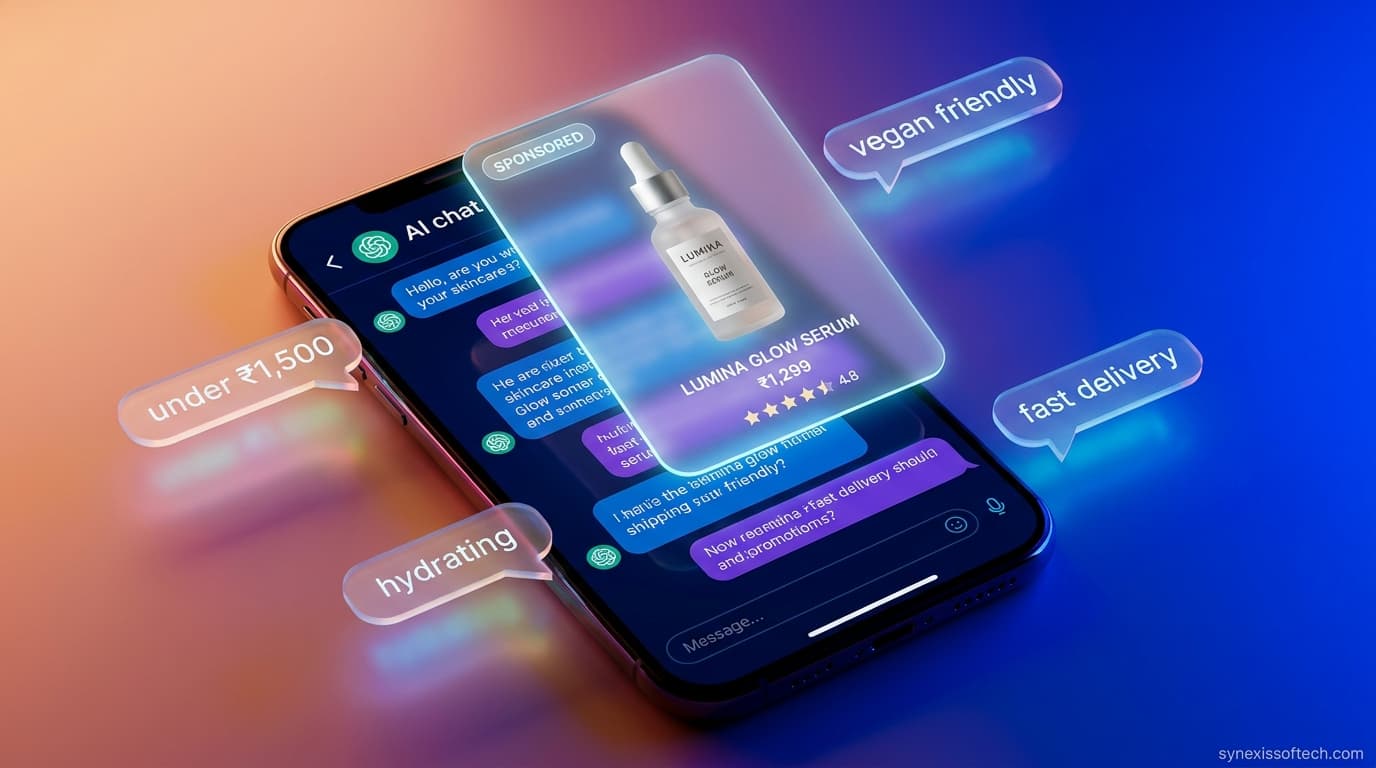
GEO is not paid advertising. Appearing organically in AI-generated answers is not the same as running ChatGPT Ads. These are separate channels with separate strategies.
GEO, SEO, AEO, and AIO — What Is the Difference?
Several terms are being used in this space, often interchangeably. They are not the same thing:
Term | What It Means | Where It Shows Up |
|---|---|---|
SEO (Search Engine Optimisation) | Optimising for traditional search engine ranking | Google organic results, Bing |
AEO (Answer Engine Optimisation) | Optimising to become the direct answer — featured snippets, position zero | Google featured snippets, voice search |
GEO (Generative Engine Optimisation) | Optimising to be cited in AI-generated answers | ChatGPT, Perplexity, Google AI Overviews, Copilot, Gemini |
AIO (AI Optimisation) | Broader term: making all content AI-readable and AI-friendly | All AI systems that consume web content |
A business that has strong SEO is not automatically strong in GEO. The signals overlap, but they are not identical. A page that ranks #1 on Google may not be the page that ChatGPT cites — because AI systems weight different signals than search algorithms do.
Why AI Systems Cite Some Businesses and Not Others
AI language models are trained on large amounts of web content, and they are updated regularly through retrieval-augmented generation (RAG) — pulling current web content at the time of a query. The factors that influence whether your business gets cited include:
1. Crawlability
AI crawlers — GPTBot (OpenAI), ClaudeBot (Anthropic), PerplexityBot, Googlebot — must be able to access your site. Check your robots.txt file. Blocking these crawlers, intentionally or accidentally, removes your content from consideration. Your robots.txt should explicitly allow these agents.
2. Content clarity
AI systems extract information. A page that clearly states what a business does, who it serves, where it is located, and what makes it credible is easier to extract from than one that buries this information in vague marketing language. Write for extraction, not just for engagement.
3. Factual specificity
AI systems prefer content with specific, verifiable facts over generic claims. "We are a leading software company" tells an AI nothing. "We develop custom AI solutions for e-commerce businesses in Nepal and India, with completed projects across retail, logistics, and healthcare" gives an AI a set of specific entities it can understand and work with.
4. Entity relationships
AI systems think in entities — named people, places, organisations, products, and concepts — and the relationships between them. A business that clearly defines its entity (name, location, category, people, services) across its website and across the web is better understood by AI systems than one that is inconsistently described.
5. Authority and citation patterns
AI systems learn which sources are credible partly from citation patterns — who links to you, who mentions you, what publications reference your work. A business cited in credible industry publications, with reviews on trusted platforms and mentions from authoritative sources, is treated as more credible than one with no external references.
6. Structured data
Schema markup — JSON-LD code that tells AI and search systems exactly what a page contains — significantly helps AI extraction. FAQPage schema, Product schema, LocalBusiness schema, Article schema, and Review schema are all relevant depending on your content type.
7. Content that answers questions directly
AI systems are answer machines. They prioritise sources that answer questions directly and completely. A page structured as: question → clear answer → supporting detail → source is more likely to be cited than one that buries the answer in paragraphs of context.
The Five AI Engines That Matter Most in 2026
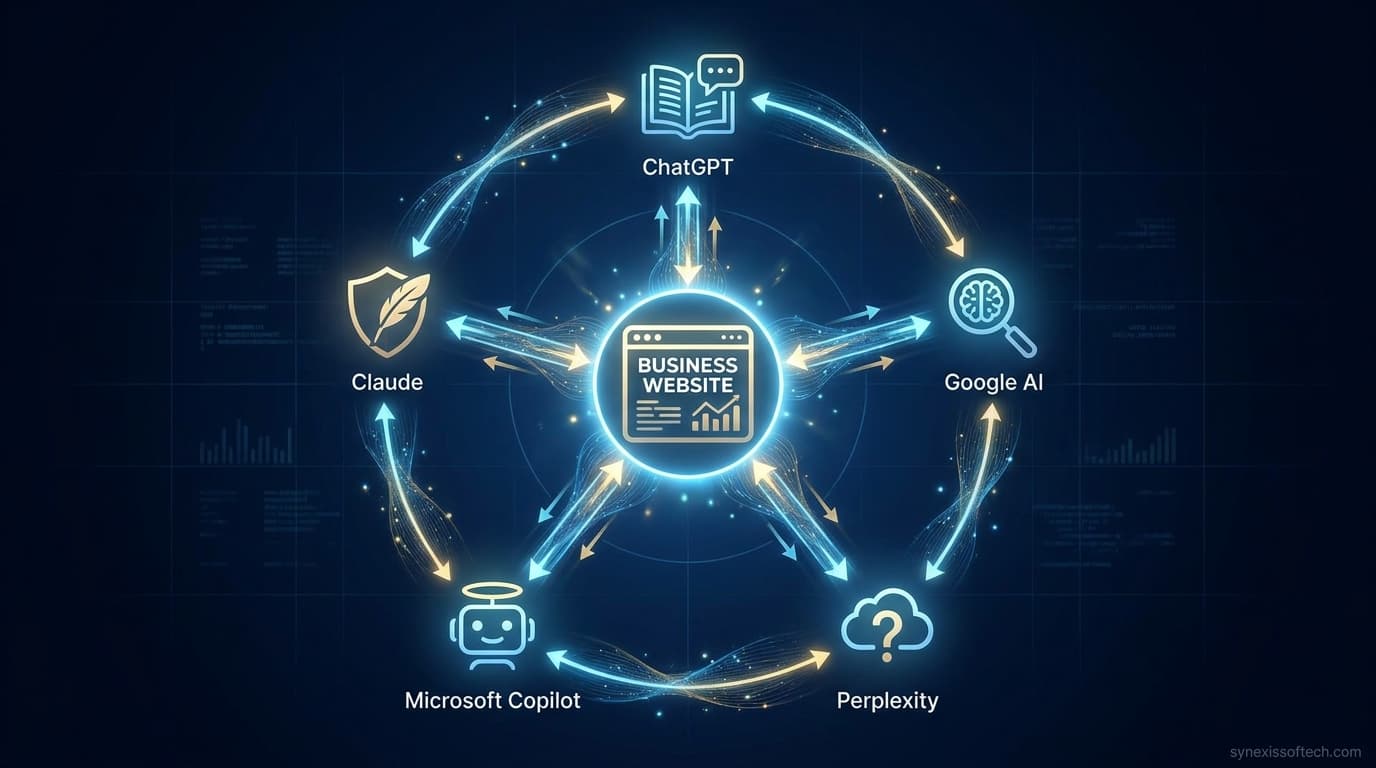
GEO is not a single channel. Visibility needs to be considered across the main AI answer engines:
Engine | Owner | Crawler | Primary Use Case |
|---|---|---|---|
ChatGPT | OpenAI | GPTBot | General research, recommendations, comparisons |
Google AI Overviews / AI Mode | Googlebot | Search query answers, local recommendations | |
Perplexity | Perplexity AI | PerplexityBot | Research with citations, fact-checking |
Microsoft Copilot | Microsoft | Bingbot | Business productivity, web research |
Claude (Anthropic) | Anthropic | ClaudeBot / anthropic-ai | Analysis, writing, research |
Each engine has different training data, retrieval logic, and citation patterns. A business should not assume that visibility in one equals visibility in all. The most effective GEO strategy improves the underlying signals — content quality, entity clarity, authority — that influence all of them.
How to Test Your Current AI Visibility
Before building a GEO strategy, understand your current position. These practical tests take less than 30 minutes and cost nothing:
Test 1: Category query
Open ChatGPT and ask: "What are the best [your category] companies in [your city/country]?" Note who appears. Note who does not. If you are not in the answer, note which competitors are and what their pages have that yours may not.
Test 2: Brand query
Ask ChatGPT: "What does [your business name] do?" If the AI does not know your business, or gives incorrect information, your entity is not clearly established. This is a GEO gap.
Test 3: Buyer intent query
Ask a question your ideal customer would ask: "I need [specific service/product] in [location]. What should I look for, and who offers it?" Observe whether your business or content appears.
Test 4: Perplexity check
Repeat tests 1–3 in Perplexity. Check which URLs it cites. These are the pages currently winning in AI search for your category.
Test 5: Google AI Overviews check
Search your primary keywords in Google and observe whether AI Overviews appear. If they do, identify which sources are cited in the overview panel.
Document what you find. This baseline gives you a clear picture of where you are before you invest in improvement.
A Practical GEO Action Plan
Step 1: Fix your robots.txt
Ensure GPTBot, anthropic-ai, PerplexityBot, Googlebot, and other AI crawlers are explicitly allowed. Many sites inadvertently block these crawlers through blanket Disallow rules or default CMS configurations.
Step 2: Create an llms.txt file
An llms.txt file — placed at the root of your website (yourdomain.com/llms.txt) — is a structured markdown file that tells AI systems which pages to prioritise and what they cover. It is an emerging standard modelled on robots.txt, designed specifically for AI consumption. List your most important pages with clear, keyword-rich descriptions.
Step 3: Audit and rewrite key pages for extraction
Review your homepage, service pages, and top-performing blog pages. For each, ask: "If an AI read this page, what would it conclude about who we are, what we do, and why we are credible?" Rewrite any page where the answer is vague or incomplete.
Step 4: Add structured data
Implement JSON-LD schema markup on key pages. Priority schema types: Organisation, LocalBusiness, Product, Service, FAQPage, Article, and BreadcrumbList. These help AI systems understand what your pages contain without having to infer it from unstructured text.
Step 5: Build entity clarity
Make sure your business is described consistently everywhere it appears online: your website, Google Business Profile, LinkedIn, industry directories, press mentions. Use the same business name, address, category, and description. Inconsistency creates confusion for AI entity resolution systems.
Step 6: Create citation-worthy content
Publish content that is: specific (real numbers, dates, named examples), quotable (direct answers to real questions), factual (linked to credible sources), and regularly updated (AI systems prefer current information). FAQ pages, comparison guides, and how-to articles in your category tend to perform well in AI citations.
Step 7: Build external mentions
Be cited by sources that AI systems already trust. Contribute to industry publications, get listed in credible directories, earn mentions in category-relevant articles, and build relationships with platforms that produce content in your space. Each credible external mention strengthens your entity authority.
GEO Is Not a One-Time Fix
AI systems update their knowledge regularly. A business that appears in ChatGPT's answers today may not appear in three months if a competitor publishes better content and builds stronger authority signals. GEO, like SEO, requires ongoing attention.
The practical cadence for most businesses is: test your AI visibility monthly, publish at least two to four pieces of citation-worthy content per month, monitor which pages are being cited by AI systems when they do reference your category, and update high-performing pages regularly to keep them current.
How Synexis Softech Can Help
Synexis Softech works with businesses on the technical and content foundations that underpin strong GEO performance. This includes technical website audits for AI crawlability, schema markup implementation, llms.txt creation, entity mapping, and AI visibility monitoring strategy.
If you want to understand where your business currently stands in AI search and build a practical plan for improvement, we can help assess the gaps and identify the highest-impact steps for your specific situation.
AI Solutions | Custom Software Development | ChatGPT Ads Guide
Frequently Asked Questions
What is GEO in marketing?
GEO stands for Generative Engine Optimisation. It is the practice of improving how AI-powered answer engines — such as ChatGPT, Perplexity, Google AI Overviews, and Microsoft Copilot — understand, trust, and cite your business in their responses. It is the AI equivalent of traditional SEO.
Is GEO the same as SEO?
No. SEO optimises for traditional search engine ranking — appearing in Google's blue links. GEO optimises for AI-generated answers — being cited in ChatGPT's responses, Perplexity's summaries, and Google AI Overviews. The signals overlap (authority, structured data, quality content) but they are not identical. A page that ranks #1 on Google may not be cited by ChatGPT, and vice versa.
How do I check if my business appears in ChatGPT answers?
Open ChatGPT and ask questions your ideal customer would ask — for example, "What are the best [category] companies in [your city]?" or "What does [your business name] do?" Note whether your business appears, what is said about it, and which competitors are cited instead. Repeat this test in Perplexity and Google AI Overviews for a fuller picture.
What is an llms.txt file?
An llms.txt file is a structured markdown file placed at the root of a website (yourdomain.com/llms.txt) that helps AI systems understand which pages to prioritise and what they contain. It is modelled on robots.txt but designed specifically for AI consumption. It lists a site's most important pages with clear, descriptive summaries, helping AI crawlers and retrieval systems identify and cite the right content.
How long does GEO take to show results?
GEO timelines vary by AI engine, competition level, and how much improvement is needed. Technical fixes (robots.txt, schema markup, llms.txt) can take effect within days of being crawled. Content and authority improvements typically take one to three months to influence AI citation patterns. GEO is an ongoing discipline, not a one-time task — AI systems update their knowledge regularly.
Does GEO replace paid advertising on ChatGPT?
No. GEO improves organic AI visibility — appearing in AI answers without paying. ChatGPT Ads are paid placements within ChatGPT conversations. They are separate channels that complement each other. A business with strong organic AI visibility and well-run paid ads is better positioned than one relying on either alone.
Published August 2026 by the Synexis Softech marketing team. AI search visibility is an evolving field — test your visibility regularly and update your strategy as platforms change.
Need help with implementation? Synexis Softech provides robust custom website development services to help scale your business.
Synexis Softech Team
AI Marketing Manager
Our team of experienced engineers and digital strategists at Synexis Softech specializes in building production-ready AI solutions, high-performance web applications, and data-driven marketing campaigns. Based in Pokhara, Nepal, we partner with growing businesses globally to turn complex technical challenges into competitive advantages.
Ready to grow your business with technology?
Let's build a practical digital solution for your business.
Talk to Our Team