ChatGPT Ads for D2C Brands: A Practical Campaign Planning Guide

Table of Contents
- 1. D2C Advertising Has a New Channel to Think About
- 2. The D2C Buyer Journey in a Conversational World
- 3. What D2C Brands Need to Know About How ChatGPT Ads Work
- 4. The Most Important Concept for D2C Campaigns: Conversational Intent Mapping
- 5. Product Data: The D2C Advantage You May Be Ignoring
- 6. Landing Pages for Conversational Intent: A Different Brief
- 7. Campaign Structure: A Starting Framework for D2C Brands
- 8. Campaign 1: Category intent
- 9. Campaign 2: Comparison intent
- 10. Campaign 3: Purchase intent
- 11. Measurement: What to Track and What Not to Confuse
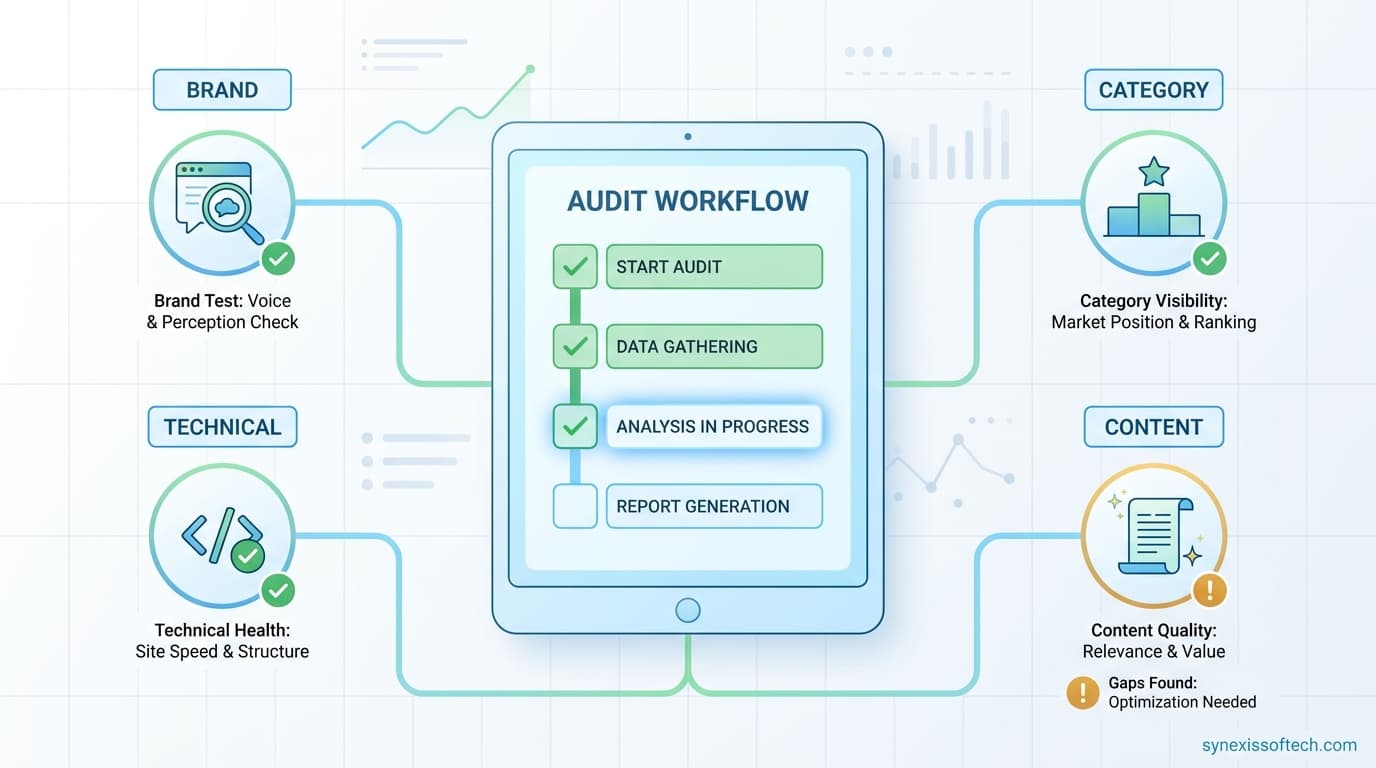
- 12. The Pre-Launch Checklist for D2C Brands
- 13. How Synexis Softech Can Help D2C Brands
- 14. Frequently Asked Questions
- 15. Can D2C brands advertise on ChatGPT in India?
- 16. How is ChatGPT advertising different from Meta advertising for D2C?
- 17. What product data do I need before running ChatGPT Ads?
- 18. What conversion tracking do I need for ChatGPT Ads?
D2C Advertising Has a New Channel to Think About
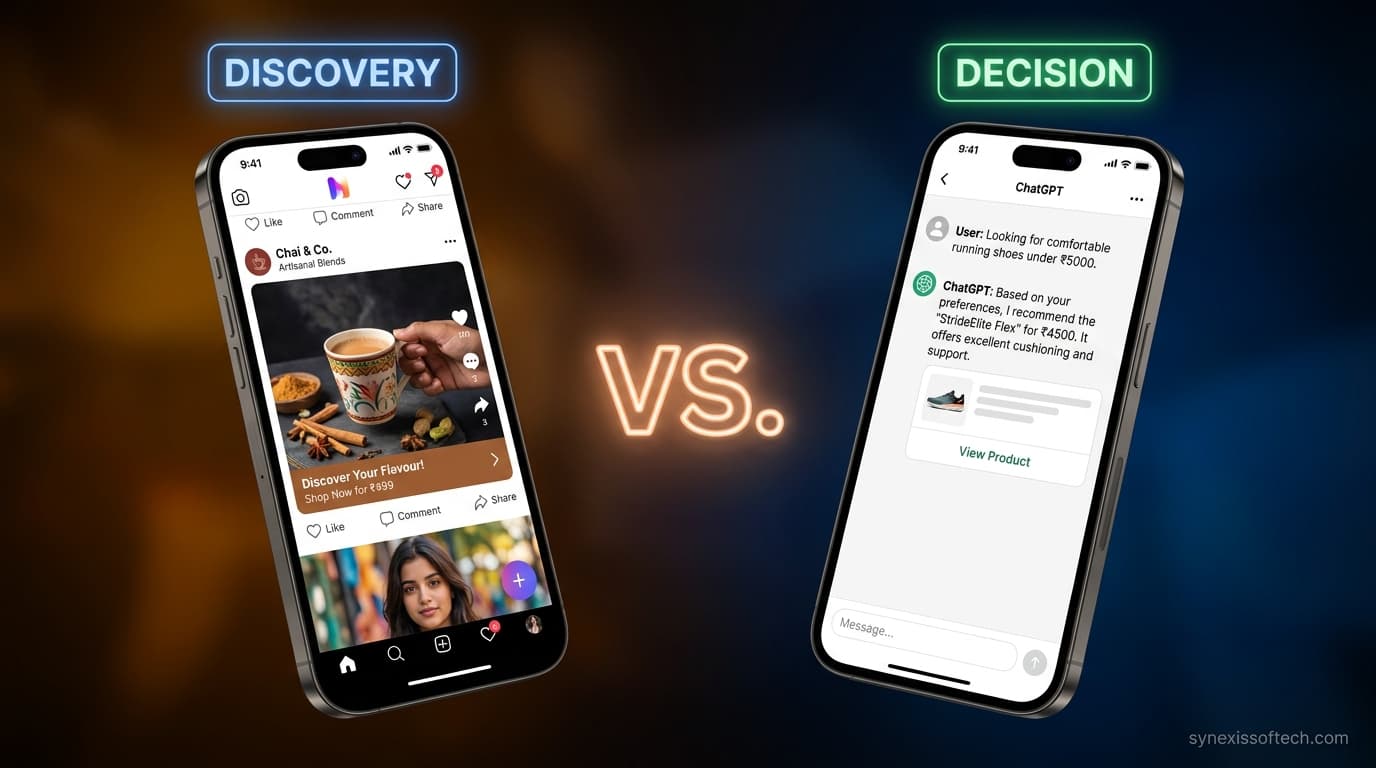
Most D2C brands have a well-established paid media playbook: Meta for discovery, Google for purchase intent, perhaps TikTok or YouTube for brand awareness. That playbook still works. But ChatGPT Ads — now live in India and eight other markets — introduces a channel that sits between discovery and decision in a way none of the others do.
A user who asks ChatGPT "I'm looking for a sustainable men's grooming brand in India under ₹500 per product — what would you recommend?" is not casually browsing. They have articulated exactly what they want, and they expect an answer they can act on. An ad that appears in that moment, for a brand that matches those criteria, reaches a buyer who is substantially further along in their decision than a Facebook scroll would suggest.
This guide is for D2C brand managers and founders who want to understand how ChatGPT Ads work, how to plan campaigns for conversational intent, and what preparation is needed before spending a rupee.
The D2C Buyer Journey in a Conversational World
D2C buying decisions — especially in fashion, beauty, wellness, food, and home — tend to involve a specific kind of research. Buyers compare ingredients, read reviews, check return policies, and think about how a product fits their lifestyle or values before purchasing.
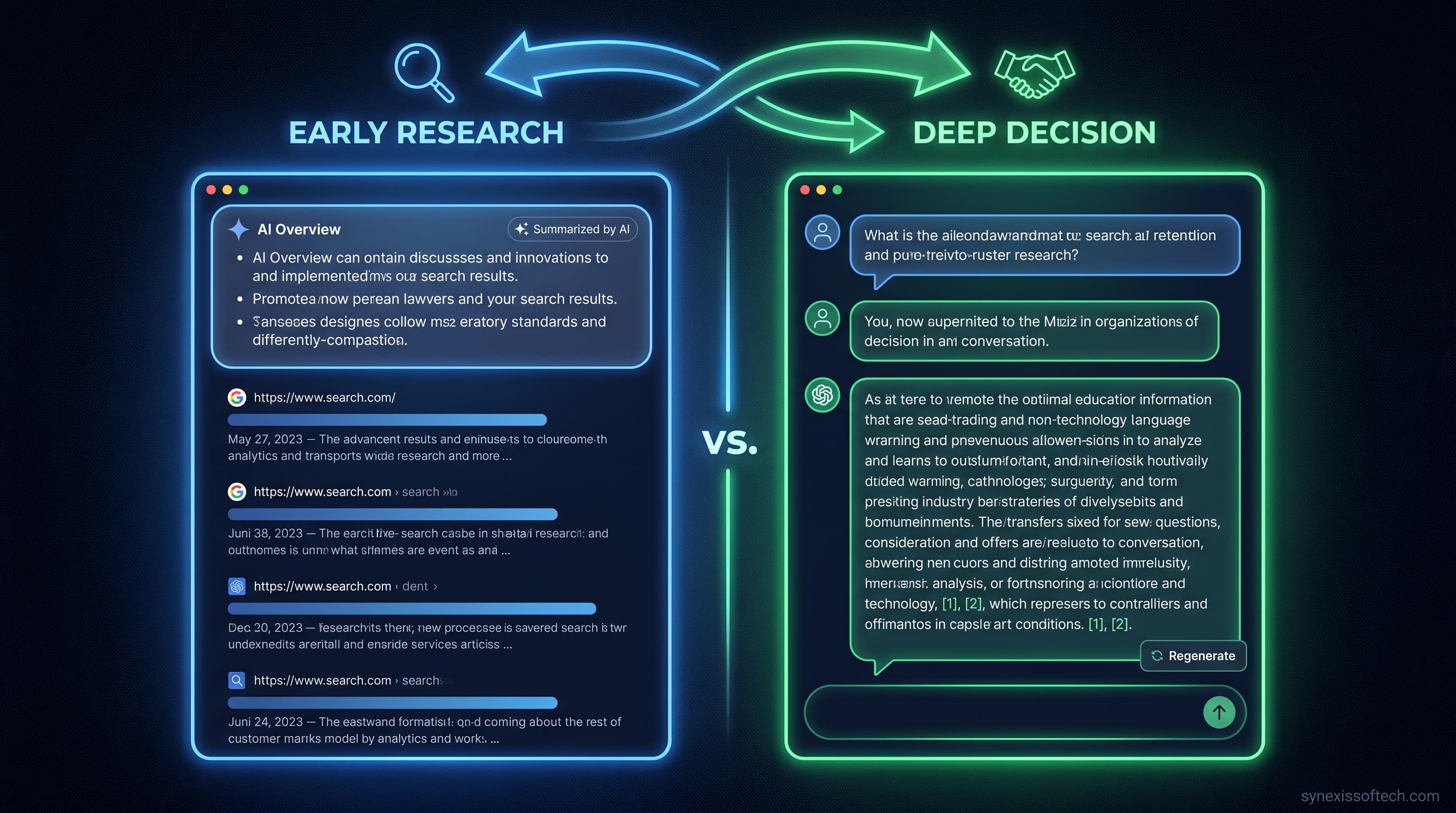
This research is increasingly happening in AI conversations, not just search results. The user who asks ChatGPT about skincare routines, sustainable packaging, or the difference between two supplement brands is doing the pre-purchase evaluation that traditional advertising tries to intercept — but rarely at the right moment.
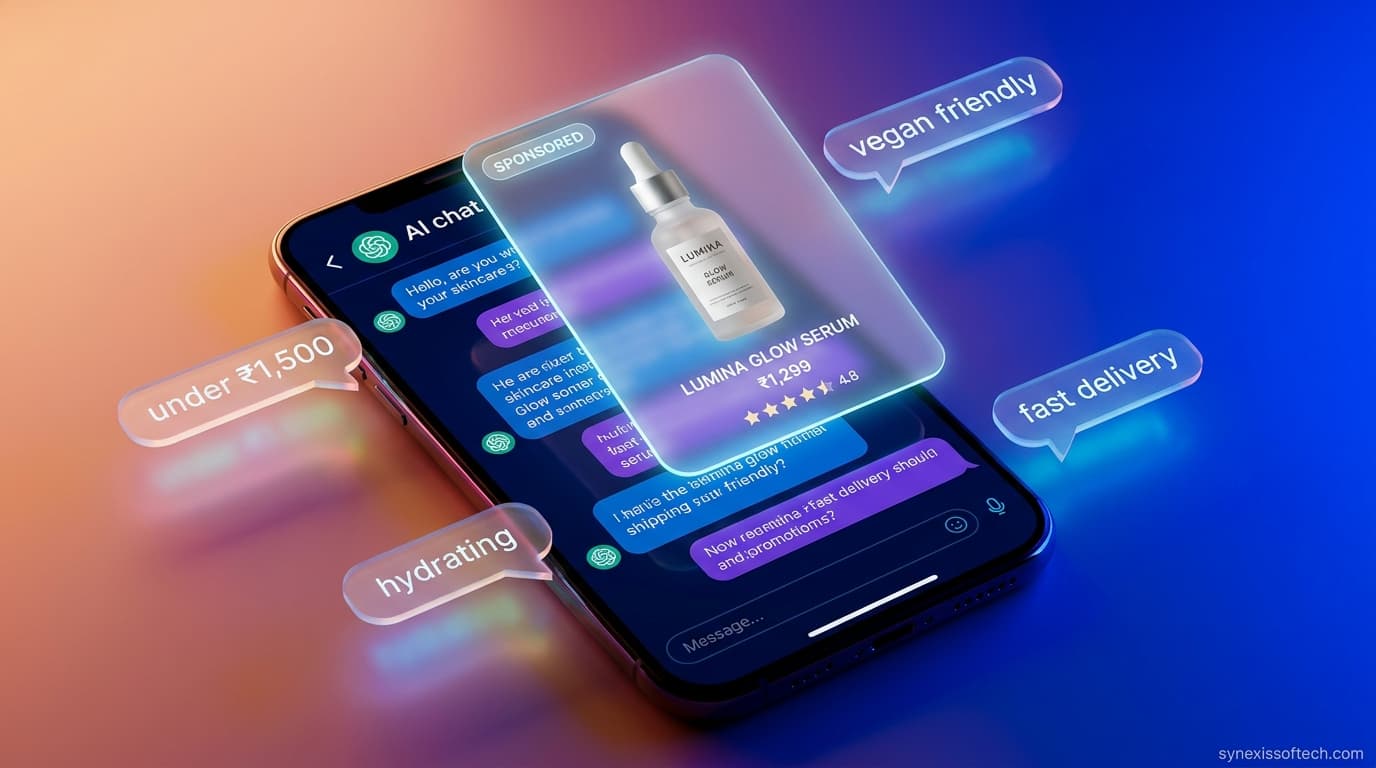
In ChatGPT Ads, the ad appears at the moment of that evaluation, in a context where the AI already knows what the user is trying to accomplish. This is meaningfully different from an ad that interrupts a social media scroll.
What D2C Brands Need to Know About How ChatGPT Ads Work
ChatGPT Ads are served based on conversational context — what OpenAI calls "context hints." The platform supports CPC and CPM campaigns via real-time bidding, with pixel-based conversion tracking on the advertiser's website. As of August 2026, they are available in nine markets including India.
What this means for a D2C brand:
- Ad placement: Ads appear within ChatGPT conversations at contextually relevant moments — when a user is discussing, researching, or seeking recommendations in a relevant category
- Audience: Free and Go tier ChatGPT users. These are typically younger, digitally engaged users — a demographic that overlaps significantly with D2C core buyers
- Bidding: CPC and CPM. CPC rates of $3–$5 have been reported in other markets (not officially confirmed by OpenAI). India rates will depend on auction dynamics in an early market
- Tracking: Pixel-based, similar to Meta's pixel. Before launching any campaign, this must be correctly installed and tested
- Access in India: Initially limited to approximately 50 invited brands. Self-serve via Ad Manager expected shortly after the August 27, 2026 launch, with a minimum daily budget of ₹725 (~$7.60)
The Most Important Concept for D2C Campaigns: Conversational Intent Mapping
In Meta advertising, you target an audience — a demographic, an interest, a lookalike. The audience may or may not be thinking about your product category at the time your ad appears.
In ChatGPT advertising, the targeting input is the context of the conversation. A user who says "I'm looking for a protein supplement that is vegan, under ₹2,000, and available on quick delivery in Hyderabad" has already declared their intent, constraints, and purchase readiness in a single message.
This means D2C campaigns should be built around intent scenarios, not just audience demographics. Before planning creatives or budgets, map out the conversations your ideal buyers are having in ChatGPT:
- What specific questions are they asking in your category?
- What constraints do they typically mention (budget, location, ingredient requirements, ethical values)?
- At what point in the conversation is a product recommendation most natural?
- What does a buyer need to know — at that moment — to click through and purchase?
Answering these questions before you set up a campaign will produce substantially better results than launching with the same creative that works on Meta.
Product Data: The D2C Advantage You May Be Ignoring
D2C brands with detailed, accurate product data have a structural advantage in ChatGPT advertising. The AI system that determines when and where to show an ad operates on the context of the conversation — and the quality of the match between that context and the advertiser's product determines relevance.
A product page that clearly states:
- Product name, category, and subcategory
- Key ingredients or materials
- Target use case and buyer type
- Price and availability
- Certifications (organic, cruelty-free, sustainable, etc.)
- Customer reviews and ratings
...is significantly more useful to a conversational ad system than one that leads with brand storytelling and buries the functional details.
Audit your product pages before launching any campaign. If an AI cannot quickly extract what your product is, who it is for, and why it is different, your ad relevance will suffer.
Landing Pages for Conversational Intent: A Different Brief
A user who clicks a ChatGPT ad has already had a detailed conversation about what they want. They have stated their need, their constraints, and often their preferences. The landing page they arrive at should acknowledge this — not reset to a generic homepage or a catch-all category page.
The brief for a D2C ChatGPT landing page is different from a Meta landing page:
| Element | Meta Ad Landing Page | ChatGPT Ad Landing Page |
|---|---|---|
| Primary job | Create interest, build brand feeling | Confirm the match, remove friction, convert |
| Copy focus | Brand story, lifestyle imagery | Specific product benefits, specifications, proof |
| CTA timing | After emotional engagement | Immediately visible above the fold |
| Review placement | Supporting role | Critical — buyer was in evaluation mode |
| Return/refund policy | Footer or separate page | Visible on the landing page — reduces risk perception |
| Delivery information | Not always necessary | Include — conversational queries often include delivery constraints |
Consider building specific landing pages for your highest-intent ChatGPT ad campaigns, matched to the conversational context you are targeting. A user who asked about vegan protein supplements deserves a landing page about your vegan protein range — not your entire supplement catalog.
Campaign Structure: A Starting Framework for D2C Brands
When the ChatGPT Ad Manager becomes available in India, a sensible starting framework for a D2C brand is:
Campaign 1: Category intent
Target conversational contexts related to your product category broadly. Goal: introduce the brand to buyers who are in early-stage research in your category. Metric: brand clicks, website sessions.
Campaign 2: Comparison intent
Target conversations where users are comparing products in your category. These users are further along in their decision. Goal: appear as a recommended option during active evaluation. Metric: product page visits, add-to-cart rate.
Campaign 3: Purchase intent
Target conversations where users have a specific constraint (budget, delivery, ingredient requirement) that your product meets. These are the highest-intent buyers. Goal: direct conversion. Metric: purchases, cost-per-acquisition.
Start with Campaign 3. The most specific targeting in the most constrained conversational context is where the most efficient early return is likely. Once you have conversion data, expand to Campaign 2, then Campaign 1.
Measurement: What to Track and What Not to Confuse
D2C brands coming from a Meta advertising background will be used to a certain measurement logic: ROAS (return on ad spend), frequency, CPM, CPC, and conversion rate. These metrics apply in ChatGPT Ads too — but with important differences:
- Attribution: ChatGPT Ads uses pixel-based tracking. Ensure your pixel is installed and tested before launch. Do not assume the same attribution windows as Meta — test and document what works for your conversion cycle.
- Organic vs. paid AI visibility: Your brand may be appearing in ChatGPT organically — without paying for ads — based on its content and entity authority. Track this separately. Do not attribute organic AI mentions to your paid campaigns.
- Incrementality: In a new channel, run test-and-hold experiments to understand true incremental return. Early CPC and ROAS figures may look different from Meta benchmarks — that does not mean the channel is better or worse without incrementality data.
The Pre-Launch Checklist for D2C Brands
- Pixel correctly installed and tracking purchases, add-to-carts, and page views
- Product pages audited for clarity, completeness, and conversion readiness
- At least one campaign-specific landing page built and tested on mobile
- Return policy and delivery information visible on landing pages
- Review count and rating competitive for your category
- Brand entity tested in ChatGPT — does it know your product correctly?
- Minimum daily budget confirmed (₹725 in India, per Ad Manager reports)
- Conversion tracking verified with a test purchase or form submission
- Ad Manager access confirmed or waitlisted
How Synexis Softech Can Help D2C Brands
Synexis Softech works with D2C and e-commerce brands on the technical infrastructure that makes AI advertising and AI visibility possible — from product data architecture and conversion tracking setup to e-commerce platform development, AI solutions, and custom integrations.
Suggested internal links: E-Commerce Development | AI Solutions | ChatGPT Ads India Guide
Frequently Asked Questions
Can D2C brands advertise on ChatGPT in India?
Yes, in principle. ChatGPT Ads launched in India on August 27, 2026. The initial cohort is approximately 50 invited brands. Self-serve access via the Ad Manager is expected shortly after, with a minimum daily budget of ₹725 (~$7.60). D2C brands should monitor OpenAI's official channels for access announcements and prepare their product data and landing pages in advance.
How is ChatGPT advertising different from Meta advertising for D2C?
Meta ads intercept users during passive social media scrolling, targeting by demographics and interests. ChatGPT Ads appear during active, intentional research conversations — where the user has already stated their need, budget, and preferences. The intent level is typically higher, but the volume and optimisation history of Meta advertising is far greater. The two channels serve different roles in a D2C media mix.
What product data do I need before running ChatGPT Ads?
At minimum: clear product name, category, key ingredients or materials, target use case, price, availability, certifications (if relevant), and customer reviews. The more precisely your product data is structured, the better the contextual relevance match when your ad is served in a related conversation.
What conversion tracking do I need for ChatGPT Ads?
ChatGPT Ads uses a pixel-based conversion tracking system installed on the advertiser's website — similar in concept to the Meta Pixel or Google Tag. Before launching any campaign, ensure your tracking pixel is correctly installed, firing on the right events (purchases, add-to-carts, page views), and has been verified with a test conversion.
Published August 2026. ChatGPT Ads access and features are evolving. Verify current availability and pricing with OpenAI before campaign planning.
Need help with implementation? Synexis Softech provides robust custom website development services to help scale your business.
Synexis Softech Team
AI Marketing Manager
Our team of experienced engineers and digital strategists at Synexis Softech specializes in building production-ready AI solutions, high-performance web applications, and data-driven marketing campaigns. Based in Pokhara, Nepal, we partner with growing businesses globally to turn complex technical challenges into competitive advantages.
Ready to grow your business with technology?
Let's build a practical digital solution for your business.
Talk to Our Team