ChatGPT Ads in India: What Indian and South Asian Businesses Should Do Right Now

Table of Contents
- 1. A Customer Finds Your Business Differently Now
- 2. ChatGPT Ads in India: What Has Actually Happened
- 3. Why India Is a Significant Market for This
- 4. 7 Business Types That Should Pay Close Attention
- 5. 1. E-Commerce Brands
- 6. 2. D2C Fashion and Beauty Brands
- 7. 3. SaaS and Software Companies
- 8. 4. Travel and Hospitality
- 9. 5. Restaurants and Food Businesses
- 10. 6. Education and EdTech
- 11. 7. Local Professional Services
- 12. ChatGPT Ads vs Google Ads: A Practical Comparison
- 13. Three Things That Are Not the Same (and Why It Matters)
- 14. The Biggest Mistake Indian Businesses Could Make
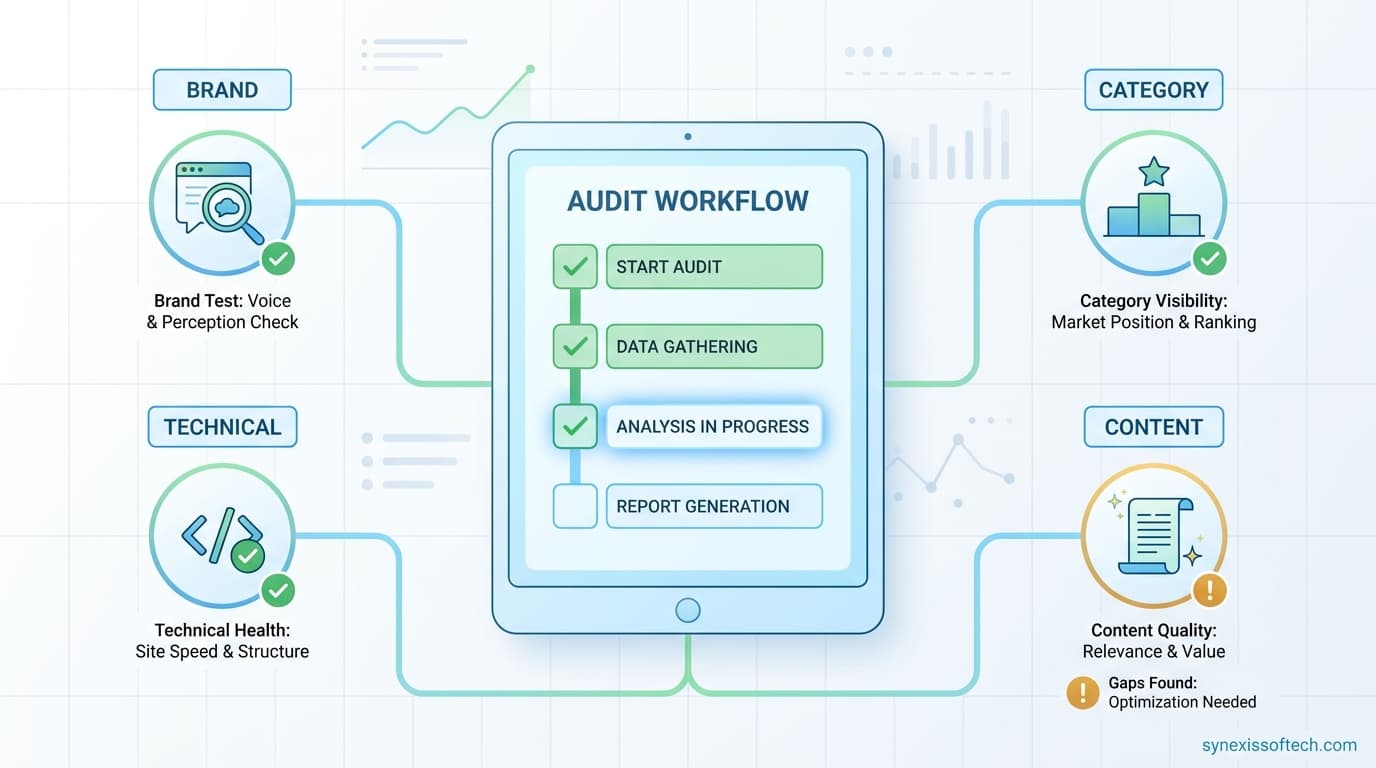
- 15. How to Prepare Your Business for ChatGPT Ads: The Practical Checklist
- 16. Website Audit
- 17. Product and Service Catalog Audit
- 18. AI Visibility Audit
- 19. Content Audit
- 20. Conversion Tracking
- 21. Landing Page Audit
- 22. Structured Data
- 23. Brand Authority
- 24. Customer Reviews
- 25. AI Search Testing
- 26. What Nepalese Businesses Can Learn From India
- 27. Can My Business Advertise on ChatGPT — Right Now?
- 28. On Cost: What Is Known and What Is Not
- 29. How Synexis Softech Can Help
- 30. Frequently Asked Questions
- 31. When did ChatGPT Ads launch in India?
- 32. How can Indian businesses advertise on ChatGPT?
- 33. How much do ChatGPT Ads cost in India?
- 34. Which Indian users see ChatGPT Ads?
- 35. Are ChatGPT Ads available in Nepal?
- 36. Will ChatGPT Ads replace Google Ads for Indian businesses?
- 37. What types of Indian businesses can advertise on ChatGPT?
- 38. What is the difference between advertising on ChatGPT and appearing in ChatGPT organically?
- 39. How can a small Indian business prepare for ChatGPT Ads without a large budget?
- 40. Who are OpenAI's advertising agency partners in India?
- 41. What is GEO and why does it matter for Indian businesses now?
A Customer Finds Your Business Differently Now
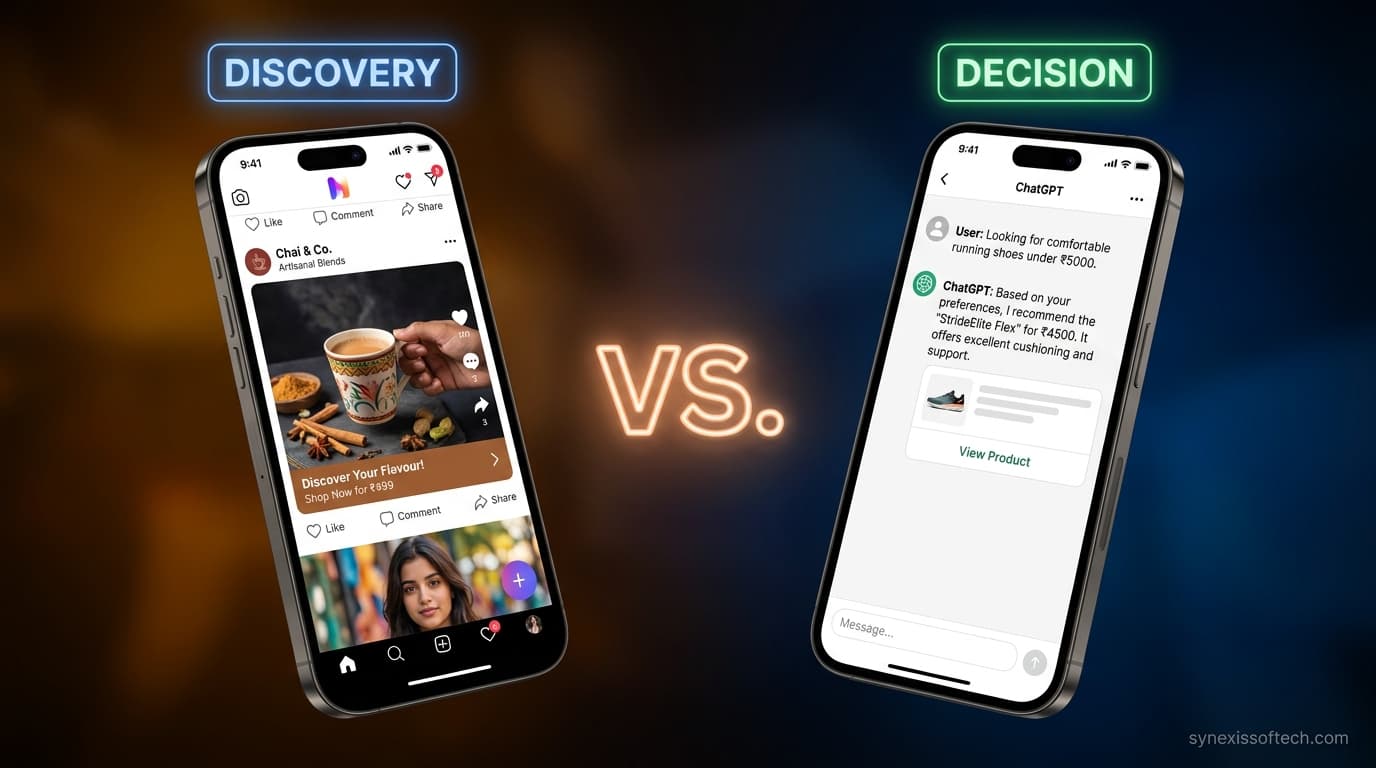
Consider a practical scenario. A customer in Mumbai wants to find a reliable accounting software for her small business. A year ago, she would have searched "accounting software India" on Google, scanned three or four results, maybe watched a YouTube review, and made her decision.
Today, she may open ChatGPT and type: "I run a small trading business in Mumbai with 5 employees. I need accounting software that handles GST filing, works on mobile, and costs less than ₹3,000 per month. What would you recommend?"
The AI gives her a structured answer with two or three options. She reads it, asks a follow-up question, and clicks through to one of the recommendations. The decision is largely made inside the chat window.
For businesses in India and across South Asia, this is not a distant future scenario. It is already happening — and on August 27, 2026, OpenAI added a commercial dimension to it by launching ChatGPT Ads in India.
ChatGPT Ads in India: What Has Actually Happened
OpenAI's advertising rollout in India is confirmed. Here is what is verified as of August 2026:
Launch date: August 27, 2026
Initial access: Approximately 50 pre-selected brands are in the first cohort. These are invited participants, not open-to-all advertisers.
Self-serve access: An Ad Manager tool is scheduled to follow the initial launch. The reported minimum daily budget is ₹725 (approximately US$7.60).
Who sees the ads: ChatGPT Free tier users and Go tier users in India. Users on Plus, Pro, and Business plans are excluded.
What ChatGPT Free and Go means for reach: The free tier represents the largest share of ChatGPT's user base. In India, where AI adoption has grown rapidly and free-tier usage is proportionally higher, this is a significant addressable audience.
Context: India follows the US (February 2026), Europe (August 2026), and markets including Canada, UK, Australia, New Zealand, Japan, and South Korea.
Source: TechCrunch, August 27, 2026.
What is not yet confirmed publicly: the full list of eligible advertising categories, targeting parameters, specific ad formats, and the exact launch date for the self-serve Ad Manager. Businesses should monitor OpenAI's official channels for these details.
Why India Is a Significant Market for This
India is not simply another market in OpenAI's advertising expansion. Several factors make it particularly consequential for the region:
India has one of the world's largest and fastest-growing digital populations, with over 700 million internet users. Mobile-first consumption is the norm, not the exception. UPI-based digital payments have normalised online commerce at a scale few countries have achieved this quickly. D2C brands have emerged across fashion, beauty, food, health, and consumer electronics as a genuine force — many with lean marketing teams that need efficient, high-intent channels.
MSMEs (Micro, Small and Medium Enterprises) represent the backbone of the Indian economy and, increasingly, its digital commerce sector. A low-barrier advertising channel — the reported minimum daily budget is less than the cost of a restaurant meal — is designed to be accessible to this segment.
For the broader South Asia region, India's rollout signals where AI advertising is moving in the neighbourhood. Businesses in Nepal, Bangladesh, and Sri Lanka are not currently in the confirmed rollout — but they are watching an adjacent market begin its adoption curve.
7 Business Types That Should Pay Close Attention
Not every business will benefit equally from conversational advertising. The following categories have the most immediate relevance:
1. E-Commerce Brands
Users in a ChatGPT conversation about products tend to be in active research or decision mode. An e-commerce brand with clear product data, strong reviews, and competitive pricing is well-positioned to benefit from appearing at this moment.
What to prepare: Structured product catalog, fast mobile checkout, pixel-based conversion tracking, landing pages matched to product category queries.
2. D2C Fashion and Beauty Brands
Conversational product discovery is particularly common in fashion and beauty — categories where users want help comparing options, understanding fit, and making style decisions. Indian D2C brands in this space — which have grown significantly over the past three years — have a genuine opportunity.
What to prepare: Product pages with detailed specifications, size guides, customer reviews, and clear return policies.
3. SaaS and Software Companies
Business software buying increasingly involves AI research. A founder or operations manager asking ChatGPT to compare CRM options, HR tools, or accounting software is a high-intent buyer. SaaS companies with clear positioning, pricing transparency, and feature differentiation are likely to benefit.
What to prepare: Clear comparison content, FAQ pages addressing common buyer objections, transparent pricing, free trial CTAs.
4. Travel and Hospitality
Travel planning conversations in ChatGPT can be highly detailed — destination, dates, budget, preferences, travel companions. A hotel, resort, or travel company that appears at the right moment in such a conversation is catching a customer at peak intent.
What to prepare: Accurate location and amenity data, availability integration, strong review presence, seasonal content.
5. Restaurants and Food Businesses
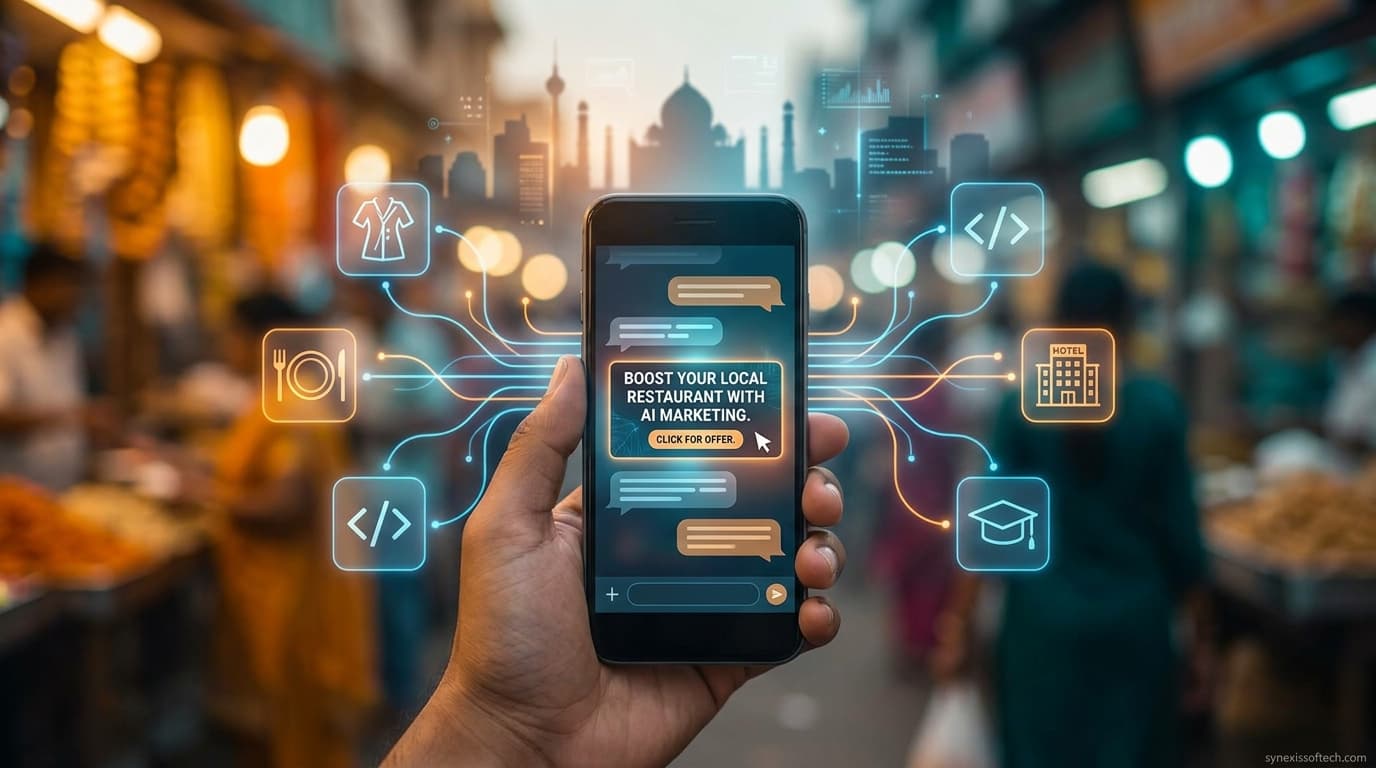
Local restaurant recommendations are one of the most common conversational queries in AI assistants. A restaurant with structured data — cuisine type, location, price range, dietary options — has the raw material that makes an AI recommendation possible.
What to prepare: Updated Google Business Profile, structured local business data on the website, recent reviews, clear menu information.
6. Education and EdTech
Students and parents making decisions about courses, coaching programs, and professional certifications are active researchers. The question "which data science course should I do for a career in India?" is exactly the kind of high-intent, high-consideration query that conversational advertising is designed for.
What to prepare: Course outcome pages, alumni testimonials (real), comparison content, clear enrollment CTAs.
7. Local Professional Services
Lawyers, chartered accountants, financial advisors, and clinics that serve local markets may benefit from conversational local discovery — particularly as AI assistants become the first point of research for service buyers.
What to prepare: Clear service descriptions, location and contact data, professional credentials, client reviews.
ChatGPT Ads vs Google Ads: A Practical Comparison
Dimension | Google Ads | ChatGPT Ads |
|---|---|---|
How users arrive | Typed a keyword | Having a conversation with stated goals |
What the platform knows | The keyword; historical behaviour | The full conversational context: need, constraints, preferences, stage |
Targeting mechanism | Keyword match; audience targeting; device; location | Conversational context signals ("context hints") |
Ad creative | Text headline + description; display; Shopping | Format not yet fully disclosed |
Pricing model | CPC, CPM, Target CPA, ROAS | CPC and CPM with real-time bidding (reported) |
Conversion tracking | Google Tag / GA4 integration | Pixel-based system on advertiser website |
Discovery type | Active search | Conversational problem-solving / research |
Maturity | 25+ years; highly optimised | Early stage; actively evolving |
Self-serve access (India) | Available | Expected via Ad Manager post-August 27, 2026 |
The conclusion from this comparison is not that one channel beats the other. Google Ads remains the dominant performance channel for most Indian businesses and will not be displaced in the short term. What ChatGPT Ads introduces is a different advertising environment with a different intent model — one that complements, not replaces, existing paid media.
Marketers who treat ChatGPT Ads as an extension of keyword advertising will likely be disappointed. Those who understand the conversational intent model and build campaigns and landing pages around it have an early-mover advantage.
Three Things That Are Not the Same (and Why It Matters)
Before planning any investment, Indian business owners should understand three related-but-distinct concepts:
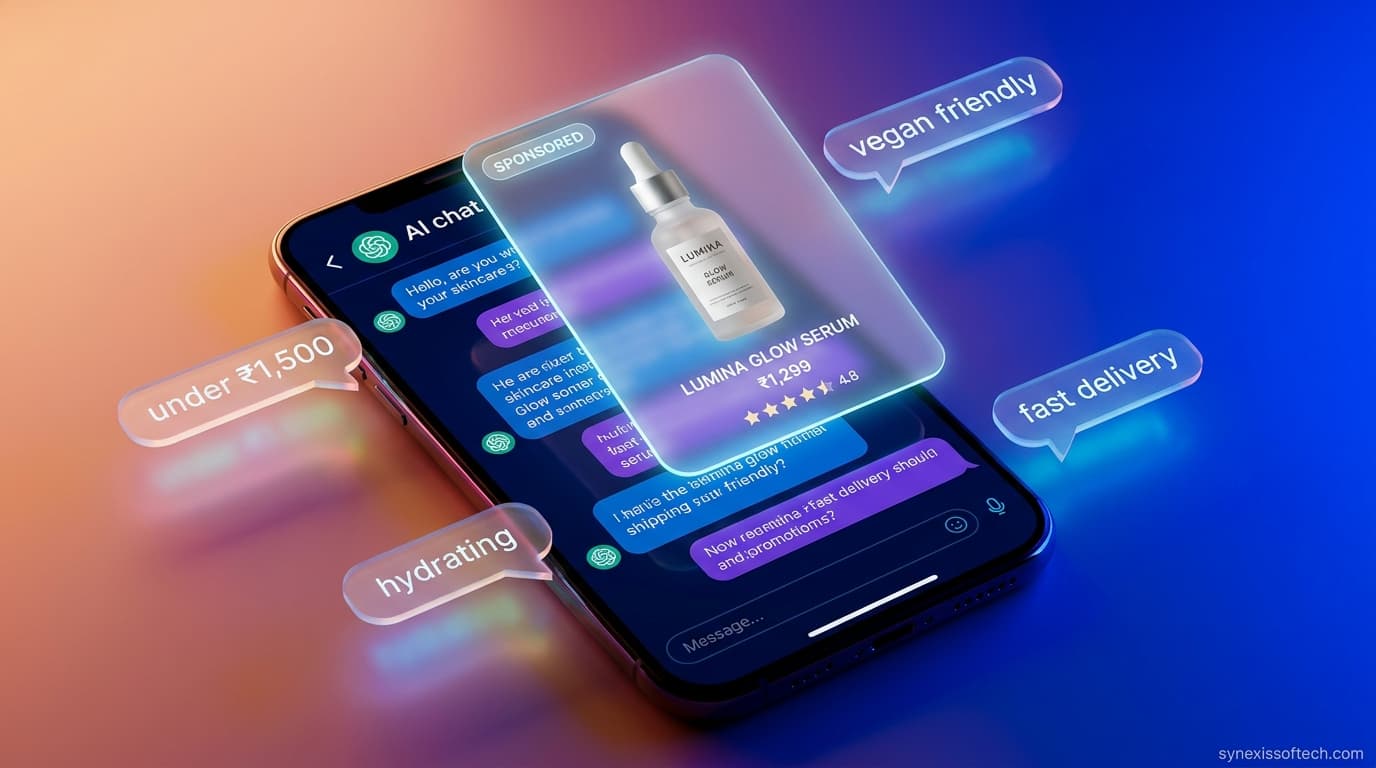
ChatGPT Ads: Paid placements inside ChatGPT conversations. You pay to appear. This is advertising.
Organic AI visibility: Your business appearing in AI-generated recommendations without payment — ChatGPT mentioning your service, Perplexity citing your article, Google AI Overviews linking to your product page. This is not paid. Running ads does not automatically improve organic AI mentions.
GEO — Generative Engine Optimisation: The practice of improving how AI systems understand and trust your business. This involves structured data, factual and quotable content, entity clarity, and E-E-A-T signals. It is to AI what SEO is to traditional search — and it affects organic visibility, not paid reach.
A business that runs ChatGPT Ads but has poor, unstructured content and a slow website will see limited results. A business that builds strong organic AI visibility first, then adds paid advertising, is likely to see both channels reinforce each other.
The Biggest Mistake Indian Businesses Could Make
Waiting.
Not necessarily waiting to run ChatGPT Ads — the platform is still limited in India and the self-serve tools are not yet fully open. The mistake is waiting to prepare the digital infrastructure that both AI advertising and organic AI visibility require.
The businesses that will have the easiest time when self-serve ChatGPT Ads fully launch in India are those that already have: a fast, mobile-optimised website; clear, structured product and service pages; accurate business data across the web; a healthy review profile; and some form of schema markup in place.
These are not difficult investments. But they take time — and the businesses that start in August 2026 will have an advantage over those that start when the Ad Manager queue is crowded.
How to Prepare Your Business for ChatGPT Ads: The Practical Checklist
Website Audit
Is the site loading in under 3 seconds on mobile?
Is it mobile-responsive on all common screen sizes?
Are there any broken links, 404 errors, or unindexed pages?
Is HTTPS active?
Product and Service Catalog Audit
Does every product or service have a dedicated page?
Are titles, descriptions, specifications, and pricing clear and current?
Are product images high quality and properly described?
Is availability information accurate?
AI Visibility Audit
Ask ChatGPT about your product category — does your brand appear?
Ask Perplexity to recommend a business like yours in your city — do you appear?
Check Google AI Overviews for your primary keywords — are you cited?
Search your brand name in ChatGPT — what does it say?
Content Audit
Do you have FAQ pages answering real buyer questions?
Do you have comparison content ("X vs Y") in categories where buyers compare?
Is your content factual, specific, and quotable by an AI?
Are you publishing content regularly?
Conversion Tracking
Is Google Analytics 4 correctly installed and tracking conversions?
Are conversion events (purchases, form fills, calls) properly tagged?
Are you able to attribute conversions to channels?
Landing Page Audit
Do you have landing pages for specific campaigns and buyer intents?
Does each landing page have a clear CTA above the fold?
Is the landing page copy consistent with the ad it follows?
Structured Data
Is Product schema in place for e-commerce pages?
Is LocalBusiness schema in place for location-based businesses?
Is FAQPage schema in place on key FAQ pages?
Is Review schema connected to real review data?
Brand Authority
Is the business listed accurately on Google Business Profile?
Is the business listed on relevant Indian directories (Justdial, Sulekha, IndiaMart for B2B)?
Is there consistent NAP (Name, Address, Phone) data across all listings?
Customer Reviews
Are you actively collecting verified customer reviews?
Are recent reviews being responded to?
Is your average rating competitive in your category?
AI Search Testing
Test five buyer intent queries in ChatGPT, Perplexity, and Google AI Overviews
Record which competitors appear and what their pages have that yours does not
Set a monthly reminder to repeat this test — AI visibility changes regularly
What Nepalese Businesses Can Learn From India
ChatGPT Ads are not currently confirmed for Nepal. As of August 2026, Nepal is not among the announced markets for either the initial rollout or the upcoming self-serve expansion.
This does not mean that Nepalese businesses should wait.
India is a regional indicator. What is beginning in India in August 2026 will, historically, reach neighbouring markets in the months and years that follow. Businesses in Nepal that prepare now will be ahead of those that scramble when access arrives.
More immediately, the organic AI visibility issue is already relevant. When a customer in Kathmandu asks ChatGPT to recommend a software development company, an e-commerce platform, a hotel, or a fashion brand in Nepal, that answer is generated right now — and some businesses will appear and others will not. This is happening without any paid advertising being required on either side.
What Nepalese businesses can do right now:
AI-readable websites: Clear, structured, fast. AI systems crawl websites like search engines do — sites with good technical foundations are more likely to be understood and cited.
Strong product and service data: Descriptions, specifications, pricing, availability. The more complete the information, the more likely an AI can accurately represent the business.
Local SEO as AI SEO: The signals that make a business appear in Google Local results — accurate NAP, Google Business Profile, reviews, local citations — overlap significantly with what makes a business visible in local AI recommendations.
Reviews: Verified, recent, platform-diversified. Reviews matter to AI recommendation systems.
E-commerce infrastructure: Businesses without a functional online purchase path miss the conversion half of AI-driven discovery.
Content that answers questions: If a potential customer's question can be answered by your website, it can be answered on their behalf by an AI citing your website. That is the organic AI visibility opportunity — and it is available now.
The preparation for organic AI visibility and the preparation for ChatGPT Ads when they arrive in Nepal are almost identical. Starting now costs nothing beyond time and focus. Starting later means competing in a more crowded environment.
Can My Business Advertise on ChatGPT — Right Now?
If your business is in India: The initial cohort of approximately 50 brands has been selected. Self-serve access via the ChatGPT Ad Manager is expected in the weeks following August 27, 2026. Monitor OpenAI's official channels for the launch and access information. The reported minimum daily budget is ₹725 (~$7.60), making it accessible for small businesses once open.
If your business is elsewhere in South Asia (Nepal, Bangladesh, Sri Lanka, Pakistan): ChatGPT Ads are not currently available in your market as a confirmed advertising channel. You can prepare your digital infrastructure and monitor OpenAI's expansion announcements. Contacting OpenAI directly or through their agency partners (WPP, Omnicom) may provide earlier access information.
If your business is in the US, Canada, UK, Australia, New Zealand, Japan, or South Korea: Advertising access is currently available via OpenAI's agency partners or direct engagement with OpenAI's ads team.
On Cost: What Is Known and What Is Not
For India, the self-serve Ad Manager minimum daily budget of ₹725 (~$7.60) has been reported by TechCrunch based on the August 27, 2026 announcement. This is the floor for campaign spend, not a typical or average cost.
CPC (cost per click) rates of $3–$5 have been reported by third-party sources for other markets. OpenAI has not publicly confirmed these figures. Rates in India may differ significantly based on competition, category, and auction dynamics in an early market.
OpenAI's advertising costs and buying conditions are actively evolving. Businesses should verify current commercial terms directly with OpenAI before making budget decisions.
How Synexis Softech Can Help
Synexis Softech works with businesses in India, Nepal, and globally on the technology infrastructure that makes AI-driven discovery and advertising possible. This includes:
Technical website audits for AI readiness — schema, speed, structured data, entity clarity
AI visibility strategy and monitoring across ChatGPT, Perplexity, and Google AI Overviews
E-commerce platform development built for AI-readable product data
AI agents and automation for customer engagement and lead qualification
Custom software integrations for conversion tracking, analytics, and campaign infrastructure
GEO (Generative Engine Optimisation) consulting
If your business wants to understand its current AI visibility, identify infrastructure gaps, and build a practical plan for AI-driven growth, Synexis Softech can help.
Suggested internal links:
Frequently Asked Questions
When did ChatGPT Ads launch in India?
ChatGPT Ads launched in India on August 27, 2026. The initial rollout included approximately 50 pre-selected brands, with self-serve access via an Ad Manager expected in the following weeks.
How can Indian businesses advertise on ChatGPT?
As of August 27, 2026, the initial cohort of approximately 50 brands was invite-only. A self-serve Ad Manager tool is expected to open shortly after, with a minimum daily budget of ₹725 (~$7.60). Businesses should monitor OpenAI's official channels for access announcements, or contact OpenAI's authorised agency partners WPP or Omnicom.
How much do ChatGPT Ads cost in India?
OpenAI has not officially published CPC or CPM rates for India. The reported minimum daily budget for the self-serve Ad Manager is ₹725 (~$7.60). CPC rates of $3–$5 have been reported in other markets by third parties but are not confirmed by OpenAI. Businesses should verify current pricing directly with OpenAI.
Which Indian users see ChatGPT Ads?
Only users on ChatGPT's Free and Go tiers see ads. Users on Plus, Pro, and Business plans are excluded from the current advertising rollout.
Are ChatGPT Ads available in Nepal?
As of August 2026, Nepal is not among the confirmed markets for ChatGPT Ads. However, Nepalese businesses can begin preparing now — improving their website, content, structured data, and AI visibility — so they are ready when the platform expands to their market.
Will ChatGPT Ads replace Google Ads for Indian businesses?
No. Google Ads remains the dominant performance channel for Indian businesses and will not be displaced in the short to medium term. ChatGPT Ads introduces a complementary advertising environment with a different intent model. The businesses that will benefit most are those that treat ChatGPT Ads as an addition to their paid media mix, not a replacement for existing channels.
What types of Indian businesses can advertise on ChatGPT?
OpenAI has not published a comprehensive list of eligible advertising categories for the Indian market. Generally, e-commerce, D2C brands, SaaS, travel, hospitality, education, and local professional services are likely to have relevant use cases. Businesses in regulated categories (finance, healthcare, pharmaceuticals) should verify eligibility carefully. Monitor OpenAI's official advertising policy documentation for current guidelines.
What is the difference between advertising on ChatGPT and appearing in ChatGPT organically?
Advertising on ChatGPT (paid) means paying for your business to appear in relevant conversational moments. Appearing organically means ChatGPT recommends your business, product, or content in its responses without payment — because the AI has determined it is a relevant and credible source. These are two separate outcomes. Running ads does not guarantee organic mentions, and businesses with strong organic AI visibility may not need to advertise as aggressively.
How can a small Indian business prepare for ChatGPT Ads without a large budget?
The most valuable preparation steps cost more time than money. These include: ensuring your website loads quickly on mobile; creating clear product and service pages; adding FAQ content that answers real buyer questions; collecting genuine customer reviews; and making sure your business information is accurate and consistent across Google Business Profile and key directories. A technically sound website with clear information is the foundation for both paid AI advertising and organic AI visibility.
Who are OpenAI's advertising agency partners in India?
OpenAI has confirmed partnerships with WPP and Omnicom as authorised advertising agency partners globally, including for managed access in markets where self-serve tools are not yet available. Indian businesses seeking managed campaign support can enquire through these agencies or contact OpenAI's advertising team directly.
What is GEO and why does it matter for Indian businesses now?
GEO stands for Generative Engine Optimisation — the practice of improving how AI systems understand, trust, and cite your business. As Indian consumers increasingly use ChatGPT, Perplexity, and Google AI Overviews to research and make decisions, the businesses that appear in those AI-generated answers have a significant visibility advantage. GEO involves structured data, factual content, entity clarity, and authority signals. It affects organic AI visibility, not paid advertising, and is relevant regardless of whether ChatGPT Ads are yet available in your market.
This article is based on verified reporting as of August 2026. The ChatGPT Ads platform is actively evolving. Businesses in India and across South Asia should verify current eligibility, access timelines, pricing, and policy details directly with OpenAI before making advertising or investment decisions.
Need help with implementation? Synexis Softech provides robust custom website development services to help scale your business.
Synexis Softech Team
Marketing Manager
Our team of experienced engineers and digital strategists at Synexis Softech specializes in building production-ready AI solutions, high-performance web applications, and data-driven marketing campaigns. Based in Pokhara, Nepal, we partner with growing businesses globally to turn complex technical challenges into competitive advantages.
Ready to grow your business with technology?
Let's build a practical digital solution for your business.
Talk to Our Team