Mobile App Development for Nepal and South Asian Businesses

Table of Contents
- 1. The South Asian Mobile Context
- 2. Mid-Range Device Performance
- 3. Data Sensitivity
- 4. Payment Integration
- 5. Language and Localisation
- 6. Cross-Platform vs Native Development
- 7. React Native
- 8. Flutter
- 9. Native Development
- 10. What Makes a Mobile App Succeed in Nepal
- 11. The App Store and Google Play Publishing Process
- 12. How Synexis Softech Approaches Mobile Development
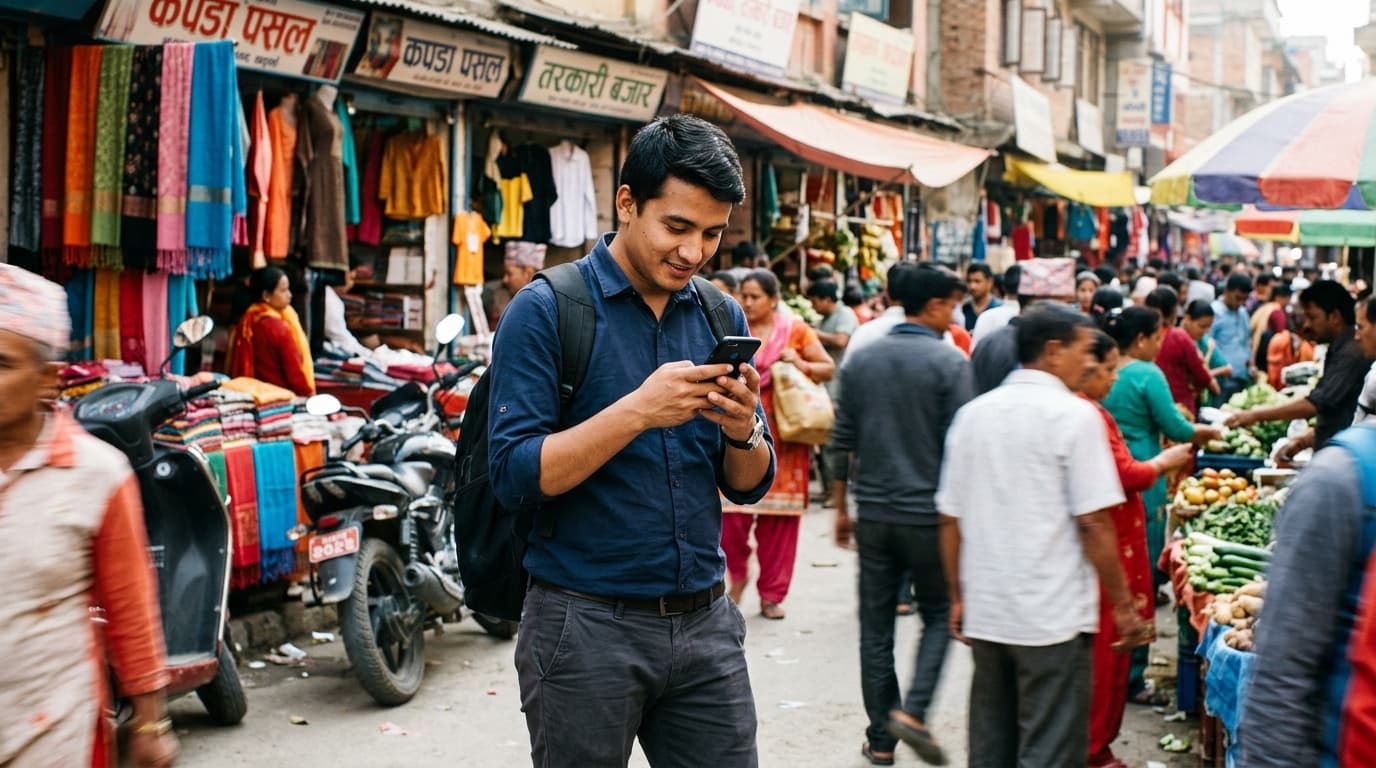
Over 85 percent of internet users in Nepal access the web via mobile. Across South Asia, mobile-first is not a trend — it is the baseline reality of how people work, shop, communicate, and consume information. For businesses in Nepal, India, Bangladesh, and Sri Lanka, a well-built mobile app is not a luxury product for large enterprises. It is an increasingly necessary competitive tool.
This guide covers what makes mobile app development in South Asia different, the key decisions businesses need to make before building, and what distinguishes apps that get used from apps that get deleted.
The South Asian Mobile Context
Building for South Asian users requires understanding a few market realities that differ significantly from North American or European contexts.
Mid-Range Device Performance
The dominant device segment in Nepal and South Asia is mid-range Android — phones with 3–4GB RAM, lower-tier processors, and often limited internal storage. Apps that perform smoothly on a flagship iPhone but stutter on a Xiaomi Redmi or Samsung Galaxy A-series will frustrate the majority of your users. Performance optimisation for mid-range hardware is not optional.
Data Sensitivity
Mobile data costs, while falling, remain a meaningful consideration for many users. Apps with heavy assets, uncompressed images, or data-hungry background sync lose users quickly. Offline functionality — allowing core features to work without a live connection — dramatically improves retention in areas with variable connectivity.
Payment Integration
Nepal has a mature mobile payment ecosystem. eSewa and Khalti dominate consumer payments. FonePay connects bank accounts directly. Any e-commerce, subscription, or service booking app needs to integrate at least eSewa and Khalti to serve Nepali users effectively. Designing a payment flow that works for users unfamiliar with card numbers is different from designing for credit-card-first markets.
Language and Localisation
While English interfaces are accepted among urban and educated users, Nepali-language apps see meaningfully better engagement in many categories — particularly retail, healthcare, and government services. Designing for Unicode Devanagari rendering, right-to-left text support where applicable, and culturally appropriate imagery are part of genuine localisation, not afterthoughts.
Cross-Platform vs Native Development
The most common decision businesses face when starting a mobile app project is whether to build native (separate apps for iOS and Android, written in Swift/Kotlin) or cross-platform (one codebase that runs on both, typically React Native or Flutter).
React Native
Built by Meta, React Native uses JavaScript to create apps that feel native on both platforms. It is the most widely used cross-platform framework and has the largest developer community. Teams with existing JavaScript expertise can often pick it up quickly. Performance is strong for most business apps, though complex animations and heavy graphics can show limitations.
Flutter
Google's Flutter uses the Dart language and renders UI components itself rather than using native components. The result is pixel-perfect consistency across platforms and strong performance even on mid-range hardware — a genuine advantage for the South Asian market. Flutter adoption has grown rapidly and is now the most common choice for new cross-platform projects at Synexis Softech.
Native Development
Native development (Swift for iOS, Kotlin for Android) delivers the best possible performance and deepest platform integration — essential for apps that use advanced device features like ARKit, complex background processing, or hardware-level security. The trade-off is cost: maintaining two separate codebases roughly doubles the engineering effort for ongoing features and updates.
For most South Asian business apps — e-commerce, service booking, logistics tracking, internal tools — Flutter delivers native-quality performance at cross-platform cost and is our standard recommendation.
What Makes a Mobile App Succeed in Nepal
Beyond technical quality, apps that succeed in the Nepali market share a few characteristics that go beyond what a technical specification captures.
Speed above everything. Nepali users will tolerate imperfect design. They will not tolerate slow load times. Every extra 100ms of latency increases abandonment. Optimise ruthlessly.
Familiar patterns. Users in Nepal have been shaped by the apps they use most — Daraz, eSewa, Facebook, YouTube. Interfaces that follow the conventions of these apps require less learning. Novel patterns require justification.
Trust signals at every friction point. Asking for personal information, payment details, or device permissions generates distrust if the app has not already established credibility. Build trust before you ask for anything sensitive.
WhatsApp as a fallback. In Nepal, WhatsApp is the default communication layer. Apps that allow users to reach support via WhatsApp, share content via WhatsApp, or receive notifications via WhatsApp link reduce friction and increase engagement.
The App Store and Google Play Publishing Process
Publishing an app is more involved than most clients expect. Both Google Play and the Apple App Store require developer accounts (with annual fees), review processes that take 1–7 days, compliance with content policies, and ongoing maintenance as operating system versions change. Budgeting for post-launch maintenance — typically 15–20% of the initial development cost per year — is essential for keeping an app functional and approved.
How Synexis Softech Approaches Mobile Development
We build mobile applications for businesses across Nepal and South Asia using Flutter as our primary framework. Our projects include delivery tracking apps, employee field reporting tools, e-commerce applications with eSewa and Khalti integration, and service booking platforms.
Every project starts with a discovery phase: mapping the user journey, identifying the core use case the app must nail before anything else, and defining the performance benchmarks we are building toward. We deliver working builds at every milestone, involve clients in user testing, and provide 3 months of post-launch support on every project.
If you are thinking about a mobile app for your Nepali or South Asian business, the best starting point is a clear answer to one question: what is the single thing your users will open this app to do? Build that brilliantly first. Everything else comes after.
Need help with implementation? Synexis Softech provides robust mobile app development to help scale your business.
Synexis Softech Team
Senior Full-Stack Developer
Our team of experienced engineers and digital strategists at Synexis Softech specializes in building production-ready AI solutions, high-performance web applications, and data-driven marketing campaigns. Based in Pokhara, Nepal, we partner with growing businesses globally to turn complex technical challenges into competitive advantages.
Ready to grow your business with technology?
Let's build a practical digital solution for your business.
Talk to Our Team