Google AI Ads in 2026: AI Overviews, AI Mode, and What Has Actually Changed for Advertisers

Table of Contents
- 1. Ads in AI Overviews: Confirmed and Expanding
- 2. Ads in AI Mode: A New Search Surface
- 3. AI Max for Search Campaigns: The Biggest Bidding Update in a Decade
- 4. Generative Creative Tools: Veo and Imagen in Google Ads
- 5. Agentic Tools for Smaller Advertisers
- 6. What These Changes Mean for Performance Marketing Strategy
- 7. What This Means for Businesses in Nepal
- 8. How Synexis Softech Approaches AI-Era Digital Marketing
- 9. Frequently Asked Questions
- 10. Are ads now showing in Google AI Overviews?
- 11. What is AI Max for Search in Google Ads?
- 12. What are Google AI Mode ads?
- 13. How do Veo and Imagen work in Google Ads?
- 14. Do these Google AI ad changes affect campaigns in Nepal?
- 15. What should advertisers prioritise given these AI changes?
Google processes over five trillion searches per year. That number comes from Google's own statements at Marketing Live 2026 — and it matters here because of what Google announced alongside it: the company is integrating advertising into AI Overviews, into AI Mode, and is upgrading Search campaign intelligence with AI Max. The changes are not incremental updates. They represent a fundamental shift in how Google Ads works and where your ads can appear.
This article is based on what Google confirmed at Marketing Live 2026 and through official product announcements. It does not extrapolate or speculate beyond the confirmed rollouts.
Ads in AI Overviews: Confirmed and Expanding
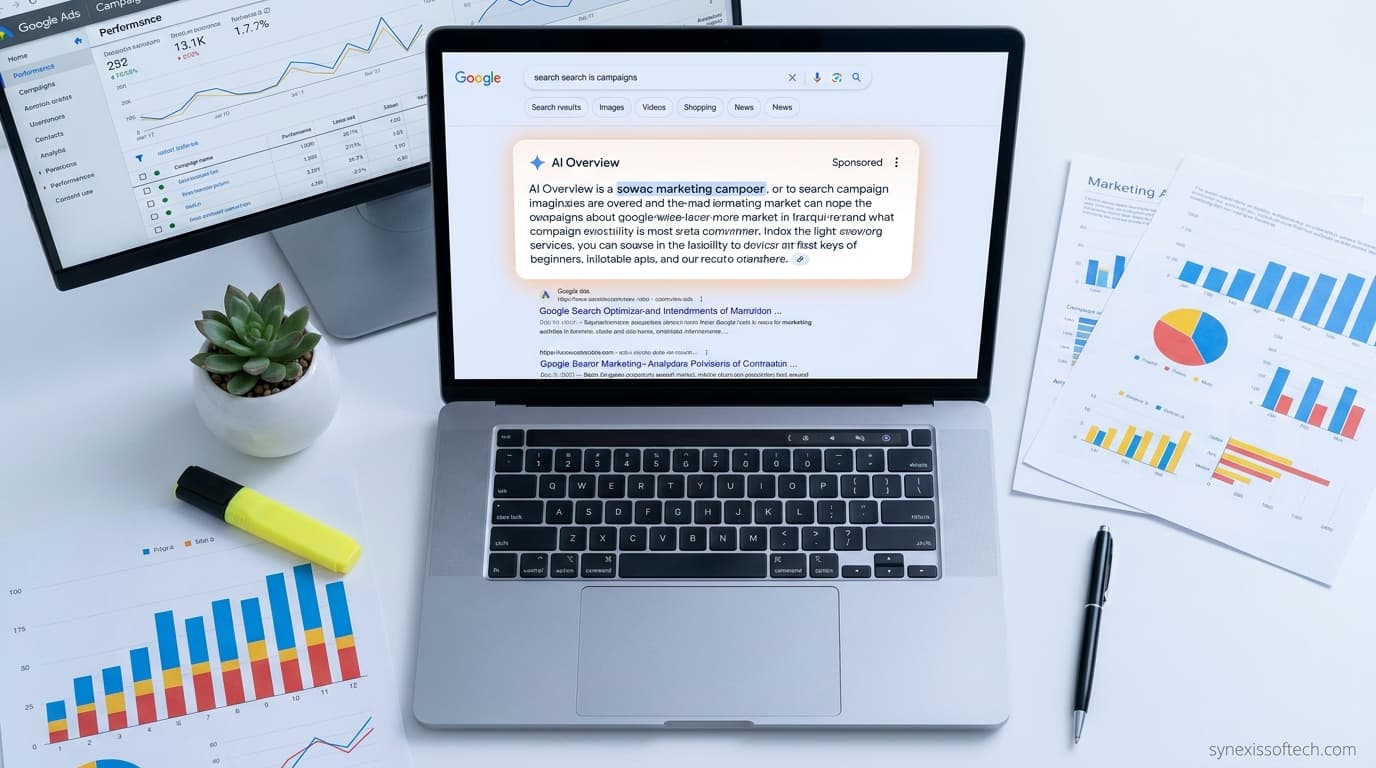
Google's AI Overviews — the AI-generated summaries that appear at the top of search results pages — now include ads. Google confirmed at Marketing Live 2024 that it was testing ads within AI Overviews, and at Marketing Live 2026 confirmed expansion to desktop, in addition to mobile.
What this means practically: when a user searches for something that triggers an AI Overview response, relevant ads can appear within or alongside that AI-generated answer. This is significant because AI Overviews typically appear for high-intent, research-oriented queries — the kind of searches where commercial decisions are being made or actively considered.
Advertisers do not buy "AI Overview ads" as a separate placement. Ads appear in AI Overviews through existing Search and Shopping campaigns, determined by Google's AI matching the ad to the query context. This means your existing campaigns may already be eligible — but it also means you need to ensure your ad copy, landing pages, and targeting are high enough quality to be selected for these placements.
Ads in AI Mode: A New Search Surface
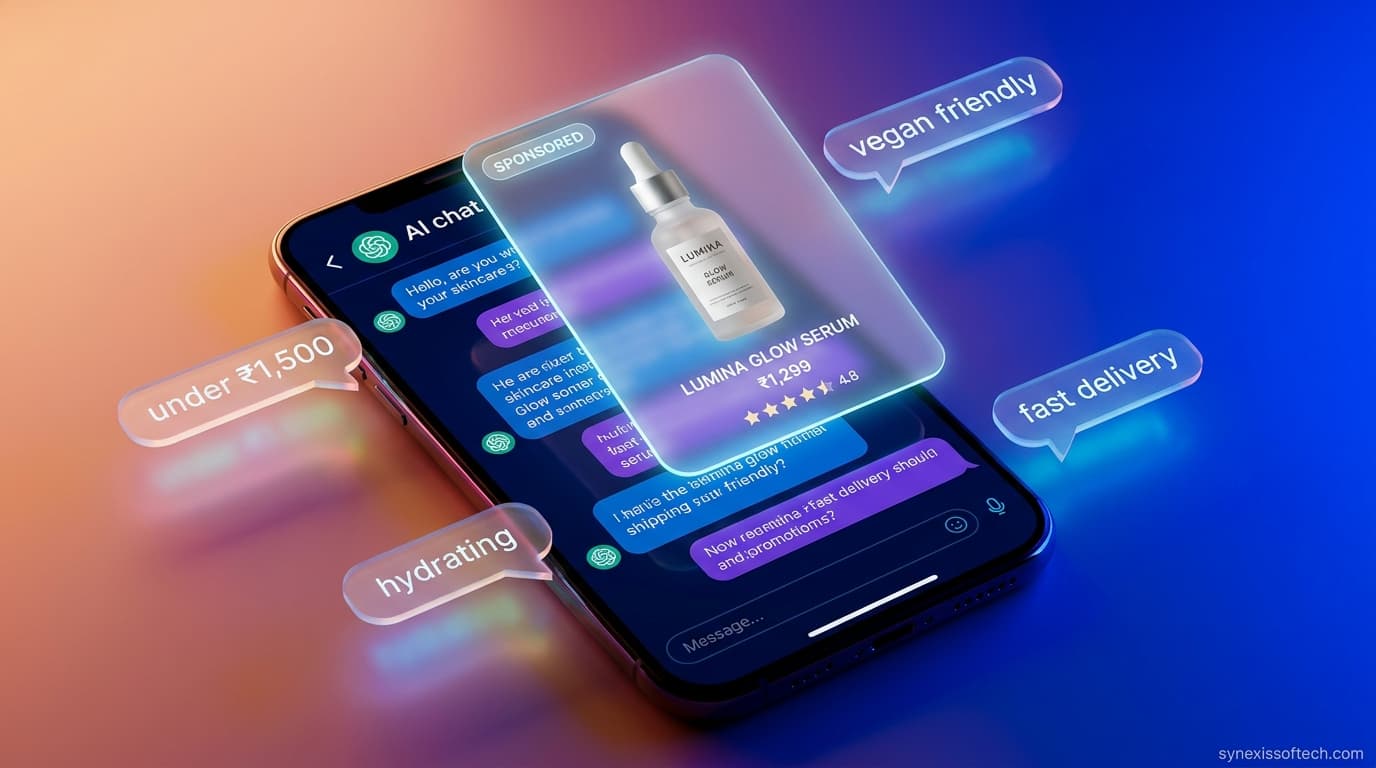
Google also confirmed at Marketing Live 2026 that ads will appear in AI Mode — the more conversational, in-depth AI search experience that Google has been expanding. AI Mode allows users to have extended back-and-forth search conversations, closer to the ChatGPT experience than traditional search.
Google described this as "creating new opportunities for customers" as people "research and discover information" through conversational queries. The framing is important: these are discovery and research moments, not necessarily transaction-ready moments. Advertisers appearing in AI Mode need to think about this intent — the user is exploring and learning, which calls for different ad messaging than a user who has already decided to buy.
The ad integration in AI Mode was announced as part of Google's broader positioning of AI search as a richer commercial surface, not a less-monetised one. The five trillion searches figure was cited specifically in the context of the opportunity this creates for advertisers.
AI Max for Search Campaigns: The Biggest Bidding Update in a Decade
Google described its AI Max for Search update at Marketing Live 2026 as "our biggest update to bidding in over a decade." That is significant language for a company that has been incrementally improving Smart Bidding for years.
AI Max uses AI to identify high-performing search opportunities that would previously go unnoticed — queries and user signals that do not fit neatly into keyword lists or manual bidding strategies but represent genuine commercial intent. The stated goal is to help advertisers "reach more discovery moments" — searches where intent is present but not yet captured by existing campaign targeting.
For advertisers, this has a practical implication: the value of your campaign increasingly depends on the quality of your conversion data and your ad creative, rather than the precision of your keyword lists. AI Max can find new query patterns, but it needs accurate performance data to optimise toward. Businesses with clean conversion tracking and high-quality landing pages will benefit more from AI Max than those with incomplete tracking or generic ad copy.
Generative Creative Tools: Veo and Imagen in Google Ads
Google confirmed at Marketing Live 2026 that Veo — its video generation model — and Imagen — its image generation model — will integrate into Google Ads and Merchant Center. This gives advertisers the ability to generate ad creative assets directly within the Google Ads platform, without needing separate creative production.
The practical application: a retailer can generate product images in different settings or contexts without a photoshoot. A service business can create video ad assets without video production. Google's AI generates the creative based on the product information and campaign context.
This is meaningful for smaller businesses and markets — including Nepal — where professional creative production has been a barrier to competing in video and display advertising. AI-generated creative lowers that barrier, though the quality of the output and how well it performs against professionally produced assets is something each advertiser will need to test.
Agentic Tools for Smaller Advertisers
Google also announced new agentic advertising tools designed to reduce complexity for smaller businesses — providing "the power of their very own Google AI" to help marketers adapt campaigns with less manual effort. These tools are positioned at businesses that do not have dedicated marketing teams or the resources to manage complex campaign structures manually.
For small businesses in Nepal and South Asia operating on limited budgets with limited marketing staff, this is potentially significant. Google's AI agent tools can help manage campaign adjustments, budget allocation, and creative testing that would otherwise require specialist knowledge or time that smaller businesses typically do not have.
What These Changes Mean for Performance Marketing Strategy
The consistent pattern across all of Google's 2026 AI ads announcements is a shift away from manual control and toward AI-driven optimisation. Keywords, manual bids, and static creative are becoming less central. Conversion data quality, landing page relevance, and ad copy that works across varied query contexts are becoming more important.
This shift has specific implications for how campaigns should be structured and evaluated.
Conversion tracking accuracy is now more important than ever. AI bidding systems optimise toward the conversion signals you provide. If your tracking is incomplete — missing certain conversion paths, attributing conversions incorrectly, or not tracking the outcomes that actually matter to the business — the AI will optimise toward the wrong targets. Auditing and fixing conversion tracking is no longer optional in an AI-driven campaign environment.
Ad copy needs to work in context, not just for keywords. Ads appearing in AI Overviews and AI Mode will be shown in response to richer, more varied queries than traditional keyword searches. Ad copy that is written only for narrow keyword triggers will underperform in these contexts. Writing for the customer's actual question — not just the keyword — is more aligned with how these placements work.
Landing page quality matters more as a quality signal. AI systems use landing page relevance as a signal in determining ad placement and quality. A technically sound, fast-loading landing page that directly addresses the query's intent will perform better in AI-integrated placements than a generic page.
Performance Max and AI Max campaigns need clean audience signals. These campaign types use audience data, first-party data, and conversion history to find relevant customers. The quality of that signal — your customer lists, your website audience data, your CRM data — directly affects how well the campaigns perform.
What This Means for Businesses in Nepal
Google Ads is widely used by Nepalese businesses targeting both local and international customers. The AI ads changes affect these campaigns directly — and some of the changes are already active.
Campaigns already running in Nepal that target English-language queries from international markets — businesses targeting the US, UK, Australia, or Gulf — are already eligible for AI Overviews ad placements where Google has expanded that feature. Businesses that have not reviewed their campaign structure, tracking, and landing pages in the context of these AI changes may be leaving placement opportunities uncaptured or performing below their potential.
The generative creative tools — Veo and Imagen integration — are particularly relevant for Nepalese businesses where creative production cost has been a limiting factor in video and display advertising. If the tools reduce the barrier to professional-quality creative, they level a playing field that has historically favoured businesses in higher-cost markets with larger creative budgets.
How Synexis Softech Approaches AI-Era Digital Marketing
Synexis Softech builds AI-powered marketing systems and manages digital marketing strategy for clients in Nepal and internationally. As Google's ad platform shifts toward AI-first optimisation, the businesses that perform best are those with clean technical foundations — accurate conversion tracking, well-structured campaigns, quality landing pages, and a clear understanding of how AI bidding systems use the signals they provide.
The team stays current on platform changes and builds marketing systems designed for where the platforms are going, not just where they have been.
Running Google Ads in Nepal or targeting international markets? Talk to Synexis Softech about AI-era performance marketing strategy.
Frequently Asked Questions
Are ads now showing in Google AI Overviews?
Yes. Google confirmed ads in AI Overviews at Marketing Live 2024 and announced expansion to desktop at Marketing Live 2026. Ads appear through existing Search and Shopping campaigns — there is no separate AI Overviews ad placement to buy directly.
What is AI Max for Search in Google Ads?
AI Max for Search is Google's updated AI bidding system, described by Google at Marketing Live 2026 as its biggest bidding update in over a decade. It uses AI to identify high-intent search opportunities beyond what keyword lists and manual bidding strategies capture, helping advertisers reach more relevant discovery moments.
What are Google AI Mode ads?
Google AI Mode is a conversational, in-depth search experience. Google confirmed at Marketing Live 2026 that ads will appear within AI Mode, targeting users who are researching and discovering information through more detailed conversational searches.
How do Veo and Imagen work in Google Ads?
Veo (Google's video generation model) and Imagen (its image generation model) are being integrated into Google Ads and Merchant Center, allowing advertisers to generate creative assets directly within the platform. This reduces the need for separate creative production, particularly for video and product imagery.
Do these Google AI ad changes affect campaigns in Nepal?
Yes. Campaigns running through Google Ads in Nepal — or targeting international markets from Nepal — are affected by these platform changes. AI Overviews ads, AI Max bidding, and the generative creative tools are rolling out globally through existing campaign types.
What should advertisers prioritise given these AI changes?
Conversion tracking accuracy, landing page quality, and ad copy written for varied query contexts rather than narrow keywords are the highest-impact priorities. AI bidding systems optimise toward the data you provide — the quality of that data determines how well they perform.
Need help with implementation? Synexis Softech provides robust custom AI agent development to help scale your business.
Synexis Softech Team
Marketing Manager
Our team of experienced engineers and digital strategists at Synexis Softech specializes in building production-ready AI solutions, high-performance web applications, and data-driven marketing campaigns. Based in Pokhara, Nepal, we partner with growing businesses globally to turn complex technical challenges into competitive advantages.
Ready to grow your business with technology?
Let's build a practical digital solution for your business.
Talk to Our Team