ChatGPT Ads Launch in India: What It Means for Indian Businesses and D2C Brands

Table of Contents
- 1. What the India Launch Actually Means
- 2. How Indian Consumers Use AI Tools for Discovery
- 3. Why India's MSME and D2C Ecosystem Should Pay Attention
- 4. The Shift From Search to Conversation in Indian Consumer Behaviour
- 5. What Indian Businesses Should Do Right Now
- 6. What Nepal Can Learn From India's Experience
- 7. How Synexis Softech Works With Indian and South Asian Businesses
- 8. Frequently Asked Questions
- 9. Why did OpenAI launch ChatGPT ads in India first?
- 10. Can Indian businesses advertise on ChatGPT now?
- 11. Which Indian businesses are most likely to benefit from AI advertising?
- 12. Does AI advertising replace Google Ads for Indian businesses?
- 13. How does AI recommendation differ from a paid Google result?
- 14. What is the most important thing an Indian business can do to prepare for AI advertising?
OpenAI did not choose India at random. When the company launched advertising on ChatGPT's free and Go tiers in August 2026, selecting India as the first market was a deliberate signal about where the company sees its most significant near-term growth opportunity outside the United States.
India has one of the world's largest and fastest-growing internet user bases. It has a massive MSME sector — the Ministry of MSME estimates over 63 million micro, small and medium enterprises across the country. It has a D2C brand ecosystem that has expanded rapidly, a digital payments infrastructure that is among the most advanced globally, and an AI tool adoption rate among young consumers and entrepreneurs that is among the highest in Asia.
For Indian businesses — from local shops to e-commerce brands to service providers — this launch is worth paying attention to, even if the immediate advertising access is limited and the full mechanics are still emerging.
What the India Launch Actually Means
OpenAI began showing advertisements on ChatGPT's free and Go tiers in India in August 2026. This is a confirmed development reported by TechCrunch. It represents the first time commercial advertising has appeared on ChatGPT in any market — making India the global test case for what AI platform advertising looks like in practice.
India being chosen first matters for several reasons. It is a large market with relatively lower digital advertising costs than Western markets, making it a practical environment for testing what works at scale. Indian consumers are active ChatGPT users — India is consistently one of the largest non-US ChatGPT user bases. And India has a diverse enough business ecosystem — from micro-entrepreneurs to funded D2C brands — to test how advertising performs across different advertiser sizes and categories.
For Indian businesses, the practical implication is that ChatGPT advertising is not a hypothetical future option. It is happening now, in India, on the tiers that most users are on.
How Indian Consumers Use AI Tools for Discovery
Understanding why AI advertising in India matters requires understanding how Indian consumers are already using AI tools in their purchase journeys — and this behaviour is developing rapidly.
Consider some real scenarios that are already happening, regardless of advertising.
A young professional in Bengaluru asks ChatGPT: "I need a budget skincare routine for oily skin, what Indian brands should I try?" The AI generates a response that may name specific brands, products, or categories. Whether that brand appears in the response depends on the quality of information available about it — its website, reviews, product descriptions, and content about its ingredients and approach.
A family in Mumbai asks: "We want to plan a five-day trip to Rajasthan, what is the best route and which type of accommodation should we book?" An AI response to this question shapes the consideration set before the family even opens a travel booking site.
A small business owner in Chennai asks: "I need accounting software for a shop with five employees, what is available in India under five thousand rupees per month?" An AI recommendation here directly influences which software the business owner investigates.
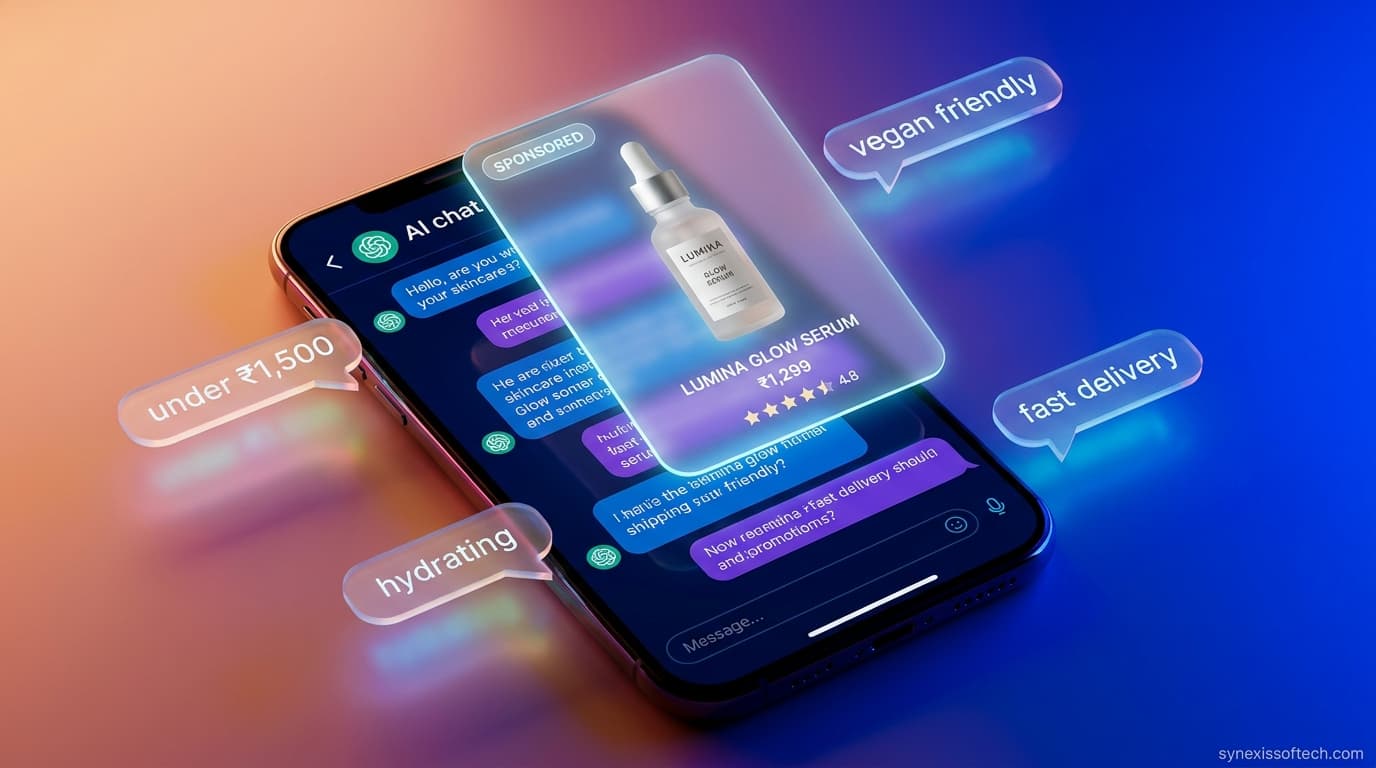
None of these scenarios involve the user explicitly searching for an ad. But each of them is a commercial discovery moment — and with advertising now on the platform, OpenAI has a mechanism to include sponsored placements within these moments.
Why India's MSME and D2C Ecosystem Should Pay Attention
India's MSME sector powers a significant portion of the country's employment and economic output. These businesses — manufacturers, retailers, service providers, artisans, food businesses, fashion brands, education providers — have historically found digital advertising through Google and Meta. Both platforms are well-established in India with relatively accessible entry points for small advertisers.
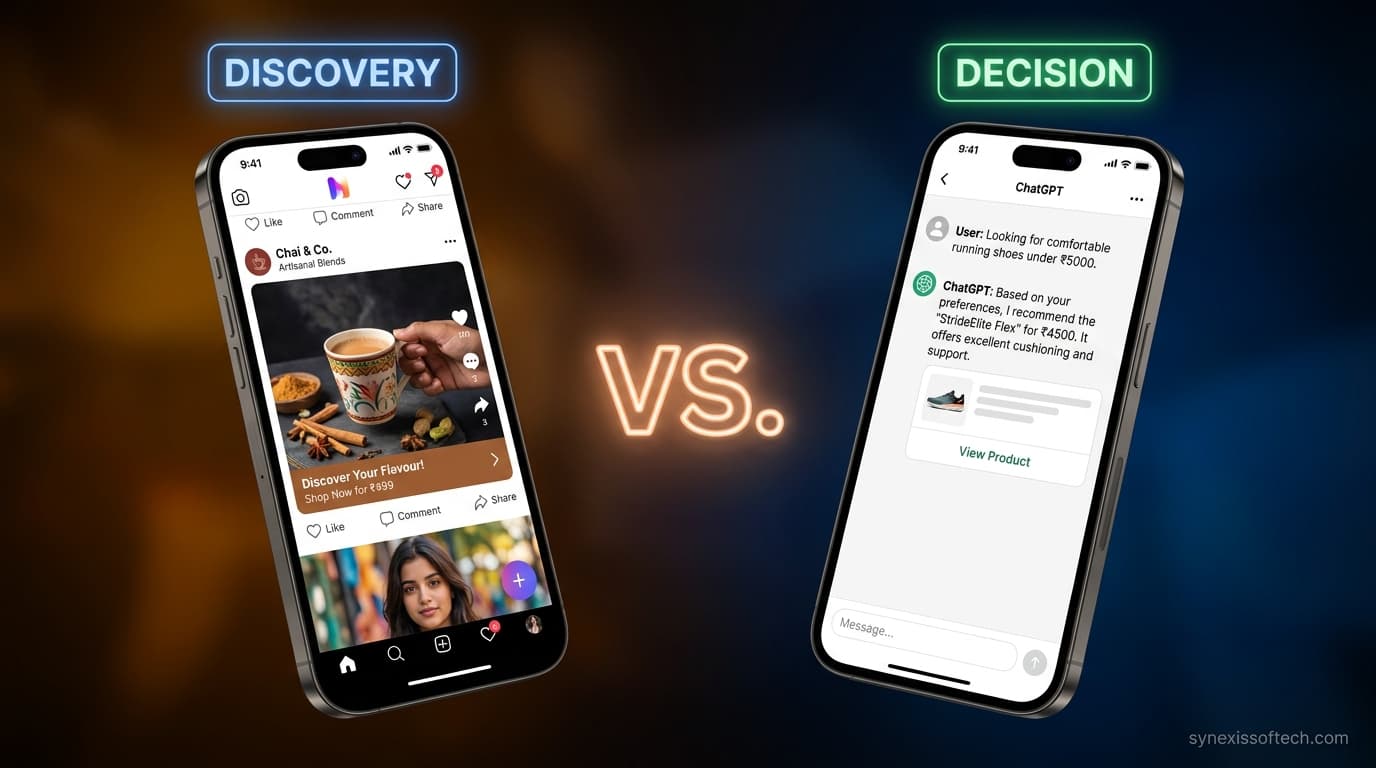
ChatGPT advertising introduces a different dynamic. The intent signal in a ChatGPT interaction — the full conversational context of what a user is trying to accomplish — is potentially more valuable than a keyword match. A user who tells ChatGPT exactly what they are looking for, why, with what constraints, and asking for a specific type of recommendation is a higher-quality commercial signal than a generic keyword search.
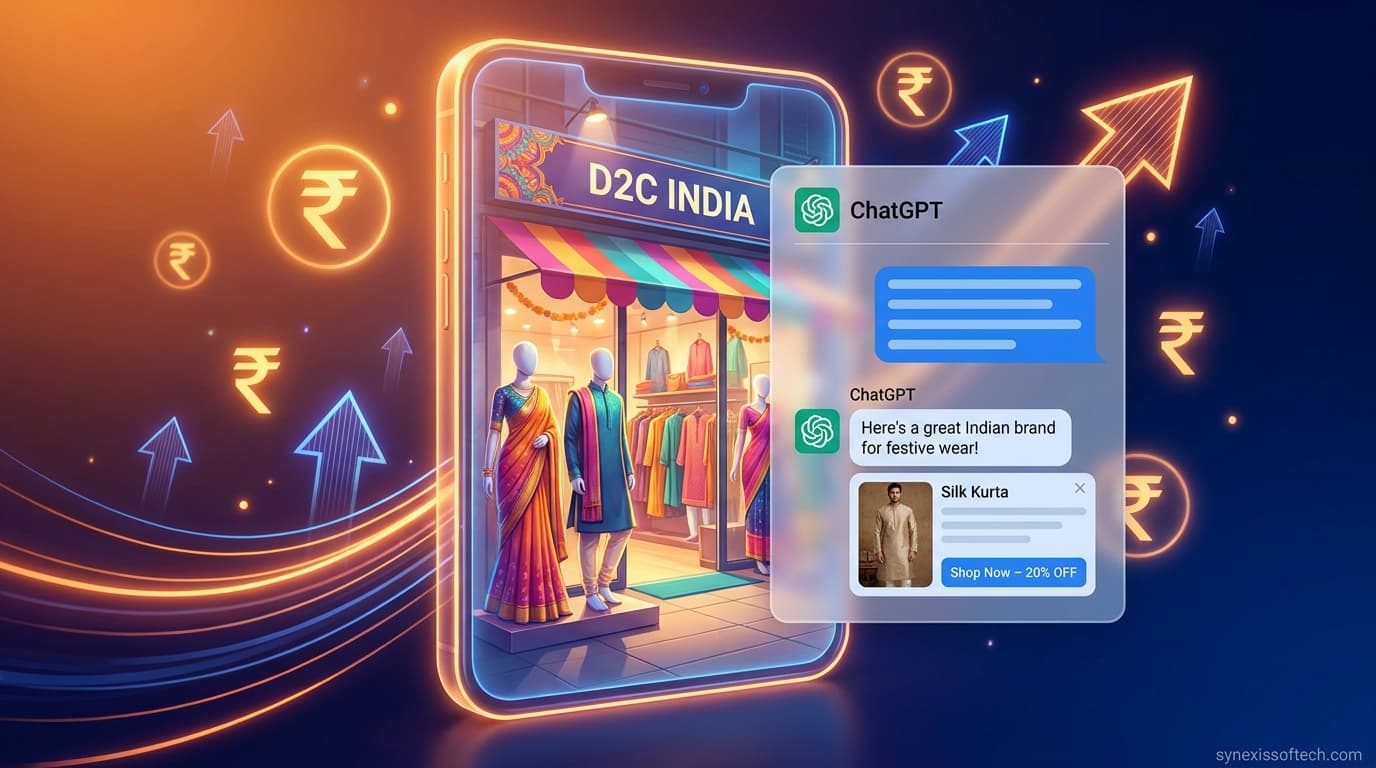
For D2C brands, this is particularly relevant. India's D2C ecosystem has grown substantially — brands in beauty, fashion, food, health, and home categories have built direct audiences through digital channels. These brands often struggle for visibility against larger players in traditional search advertising. AI-assisted discovery, where the recommendation is based on product-category fit and trust signals rather than just ad spend, could be a more level surface for brands with strong product quality and genuine customer loyalty.
The Shift From Search to Conversation in Indian Consumer Behaviour
India has one of the world's most active WhatsApp user bases. Conversational commerce — buying through chat interfaces — is already familiar to Indian consumers in a way that may not be true in other markets. The jump from "asking a contact on WhatsApp for a recommendation" to "asking an AI assistant for a recommendation" is a smaller behavioural shift for many Indian users than it might be elsewhere.
This matters because it suggests AI-assisted discovery may accelerate faster in India than in markets where conversational commerce is less established. The infrastructure of conversational intent — asking rather than searching — already exists in Indian consumer behaviour. AI platforms are adding intelligence and scale to something that Indian consumers are already comfortable doing.
For businesses, this means the discovery funnel may increasingly look like: Customer has a need → Asks AI → Receives recommendations → Visits website or store → Evaluates → Buys. The AI step is not replacing the rest of the funnel. It is inserting itself at the very beginning — before a Google search, before a social media scroll, before a marketplace browse.
What Indian Businesses Should Do Right Now
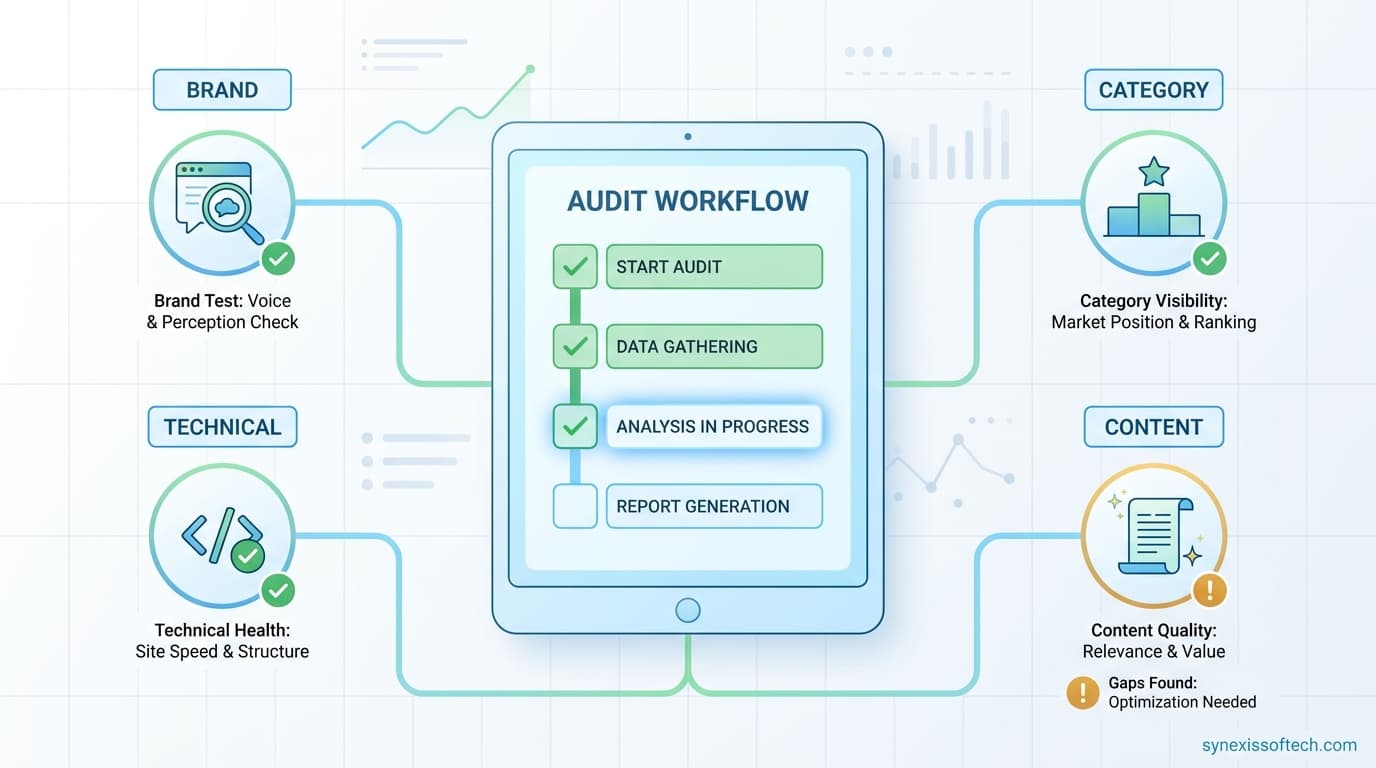
Whether or not a business intends to run ChatGPT ads, the India launch changes the preparation calculus. Businesses that want to benefit from AI-driven discovery — paid or organic — need a specific kind of digital foundation.
Your product and service information must be complete, accurate, and publicly accessible. AI systems that generate product recommendations draw on the information they can find about products — pricing, specifications, availability, use cases, comparisons with alternatives. Indian businesses with thin or incomplete product pages, outdated pricing, or no clear description of who the product is for are invisible to these systems in a way that matters commercially.
Customer reviews are a trust signal for AI systems, not just for humans. When an AI system is deciding whether to include a business in a recommendation, verified customer feedback is part of the signal. Building a legitimate review presence on Google, relevant category platforms, and your own website is foundational.
Brand entity consistency matters more than it used to. If your business name, address, category, and contact information are inconsistent across different platforms, AI systems may represent you inaccurately or fail to surface you confidently. Ensuring consistency across your Google Business Profile, your website, social profiles, and any directory listings is a practical first step.
Content that answers real customer questions is your organic AI presence. Blog posts, product FAQs, category guides, and comparison content that directly answers the questions your customers are asking AI assistants about your category positions your brand as a knowledge source. AI systems cite and recommend content that provides clear, useful answers to real questions.
What Nepal Can Learn From India's Experience
India's position as the first ChatGPT advertising market gives it a head start in understanding how AI advertising works in practice. Nepal's digital market, while smaller, shares several structural characteristics — growing internet penetration, a young population active on digital platforms, a significant informal and small business sector, and a growing e-commerce ecosystem.
The businesses in Nepal that watch what happens in India's ChatGPT advertising market now — which categories perform, what ad formats emerge, how consumer behaviour responds — will have practical intelligence when the platform potentially expands to additional South Asian markets. Technology adoption across South Asia has historically followed patterns, and India's AI advertising market is the nearest and most relevant case study Nepal has.
How Synexis Softech Works With Indian and South Asian Businesses
Synexis Softech builds AI solutions, digital marketing systems, and automation for businesses targeting India, Nepal, and international markets. As AI advertising platforms develop, the businesses best positioned to use them are those with strong digital foundations — accurate information, quality content, conversion-ready websites, and AI-readable brand presence.
If your business is building toward AI-era customer acquisition in India or across South Asia, talk to Synexis Softech about AI strategy, automation, and digital marketing systems built for where the market is going.
Frequently Asked Questions
Why did OpenAI launch ChatGPT ads in India first?
India is one of the largest ChatGPT user bases outside the US, with a large and diverse business ecosystem suitable for testing advertising at scale. The market also has lower digital advertising costs than Western markets, making it practical for a test deployment. India's advanced digital payments infrastructure and conversational commerce familiarity among consumers also make it a relevant early market.
Can Indian businesses advertise on ChatGPT now?
OpenAI has confirmed that advertising is appearing on ChatGPT's free and Go tiers in India as of August 2026. The specific process for how Indian businesses can access and purchase these placements — the advertiser interface, minimum spend, targeting options — has not been fully detailed in public announcements at the time of writing.
Which Indian businesses are most likely to benefit from AI advertising?
D2C brands, e-commerce businesses, service providers, and any business where customers actively research and compare options before buying are strong candidates. The conversational intent in ChatGPT interactions — users describing what they are looking for with full context — is particularly valuable for categories where buying decisions involve evaluation, not just impulse.
Does AI advertising replace Google Ads for Indian businesses?
No. Google remains the dominant search advertising platform in India by a substantial margin. AI advertising on ChatGPT is an additional surface, not a replacement. The customer journey increasingly involves multiple touchpoints — AI discovery, search, social, and direct — and successful businesses will maintain presence across relevant channels rather than concentrating entirely in any single one.
How does AI recommendation differ from a paid Google result?
A paid Google result appears when a user's keyword matches the advertiser's targeting. An AI recommendation is generated based on the full context of what the user is trying to accomplish, with the AI synthesising information from multiple sources to produce a response. The relevance standard is different — and the user's trust relationship with the AI response is different from their relationship with a clearly labeled search ad.
What is the most important thing an Indian business can do to prepare for AI advertising?
Ensure your product and service information is complete, accurate, and consistently represented across your website, Google Business Profile, and any category platforms your customers use. AI systems cannot recommend what they cannot understand, and incomplete or inconsistent information is the most common barrier to AI visibility for small businesses.
Need help with implementation? Synexis Softech provides robust custom website development services to help scale your business.
Synexis Softech Team
Marketing Manager
Our team of experienced engineers and digital strategists at Synexis Softech specializes in building production-ready AI solutions, high-performance web applications, and data-driven marketing campaigns. Based in Pokhara, Nepal, we partner with growing businesses globally to turn complex technical challenges into competitive advantages.
Ready to grow your business with technology?
Let's build a practical digital solution for your business.
Talk to Our Team