ChatGPT Ads Are Changing Digital Advertising: What Every Business Needs to Know

Table of Contents
- 1. The Way People Find Businesses Is Changing
- 2. What Actually Happened: The Verified Timeline
- 3. How ChatGPT Ads Work
- 4. The Shift: From Keywords to Conversational Intent
- 5. Why This Matters for E-Commerce
- 6. Why This Matters for Local Businesses
- 7. Three Things That Are Not the Same — And Why the Distinction Matters
- 8. What Businesses Need to Prepare
- 9. 1. Website quality and speed
- 10. 2. Clear product and service information
- 11. 3. Structured data (schema markup)
- 12. 4. Strong landing pages
- 13. 5. Accurate, structured business information
- 14. 6. Helpful, factual content
- 15. 7. Customer reviews and reputation
- 16. 8. Conversion tracking
- 17. 9. Clear brand positioning
- 18. 10. AI visibility monitoring
- 19. A New Strategic Question
- 20. 30/60/90-Day Preparation Framework
- 21. First 30 days: Audit and fix the foundations
- 22. 60 days: Build authority and AI-readable content
- 23. 90 days: Experiment and measure
- 24. Can My Business Advertise on ChatGPT?
- 25. On Pricing
- 26. How Synexis Softech Can Help
- 27. Frequently Asked Questions
- 28. What are ChatGPT Ads?
- 29. How do ChatGPT Ads work?
- 30. Which countries have ChatGPT Ads?
- 31. Who can see ChatGPT Ads?
- 32. How much do ChatGPT Ads cost?
- 33. Are ChatGPT Ads the same as Google Ads?
- 34. What is AI search visibility (and how is it different from ChatGPT Ads)?
- 35. What is GEO (Generative Engine Optimisation)?
- 36. How should businesses prepare for ChatGPT Ads?
- 37. Which agencies manage ChatGPT Ads?
The Way People Find Businesses Is Changing
Until recently, if a customer wanted to find a product, they typed a keyword into Google, scanned results, clicked an ad or an organic link, and made a decision. That loop has been the backbone of digital advertising for two decades.
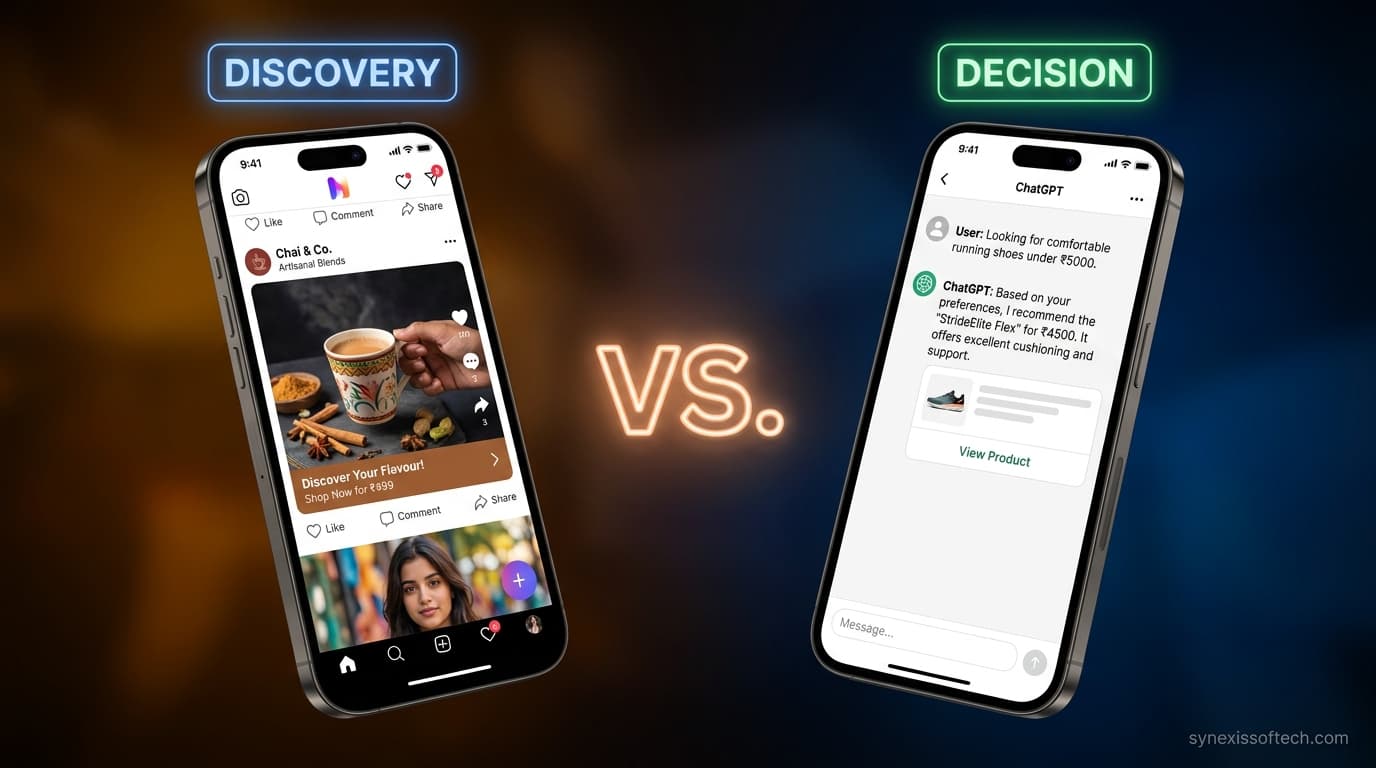
A different pattern is emerging. Increasingly, people are opening an AI like ChatGPT and having a conversation: describing their situation, asking for comparisons, requesting recommendations, and — in many cases — making a decision inside the chat window before they ever visit a website.
This shift matters because advertising has always followed attention. And attention is moving into AI-powered conversations.
ChatGPT Ads, now live in nine markets including India, are OpenAI's first commercial response to that shift. This article explains what they are, how they work, what they are not, and what businesses should do to prepare.
What Actually Happened: The Verified Timeline
OpenAI did not launch a global advertising platform overnight. The rollout has been deliberate and staged:
February 2026: ChatGPT Ads launched in the United States — the first live commercial rollout.
August 2026: Expanded to Europe.
August 27, 2026: India launch announced, beginning with approximately 50 pre-selected brands. An Ad Manager tool for self-serve campaign creation is scheduled to follow, with a minimum daily budget of ₹725 (approximately US$7.60).
Current confirmed markets: United States, Canada, United Kingdom, Australia, New Zealand, Japan, South Korea, and India.
Who sees ads: Users on ChatGPT's Free tier and Go tier. Users on Plus, Pro, Business, and Enterprise plans are excluded from the current rollout.
Who can currently advertise: In India, the initial phase is limited to the 50 invited brands. Self-serve access via the Ad Manager is expected in the weeks following launch. In other markets, advertisers can access the platform via OpenAI's agency partners WPP and Omnicom, or through direct engagement with OpenAI's ads team, led by Dave Dugan, Head of Global Ads Solutions.
Source: TechCrunch, August 27, 2026. Adsmurai, August 2026.
How ChatGPT Ads Work
The core mechanism is straightforward, though its implications for marketing are significant.
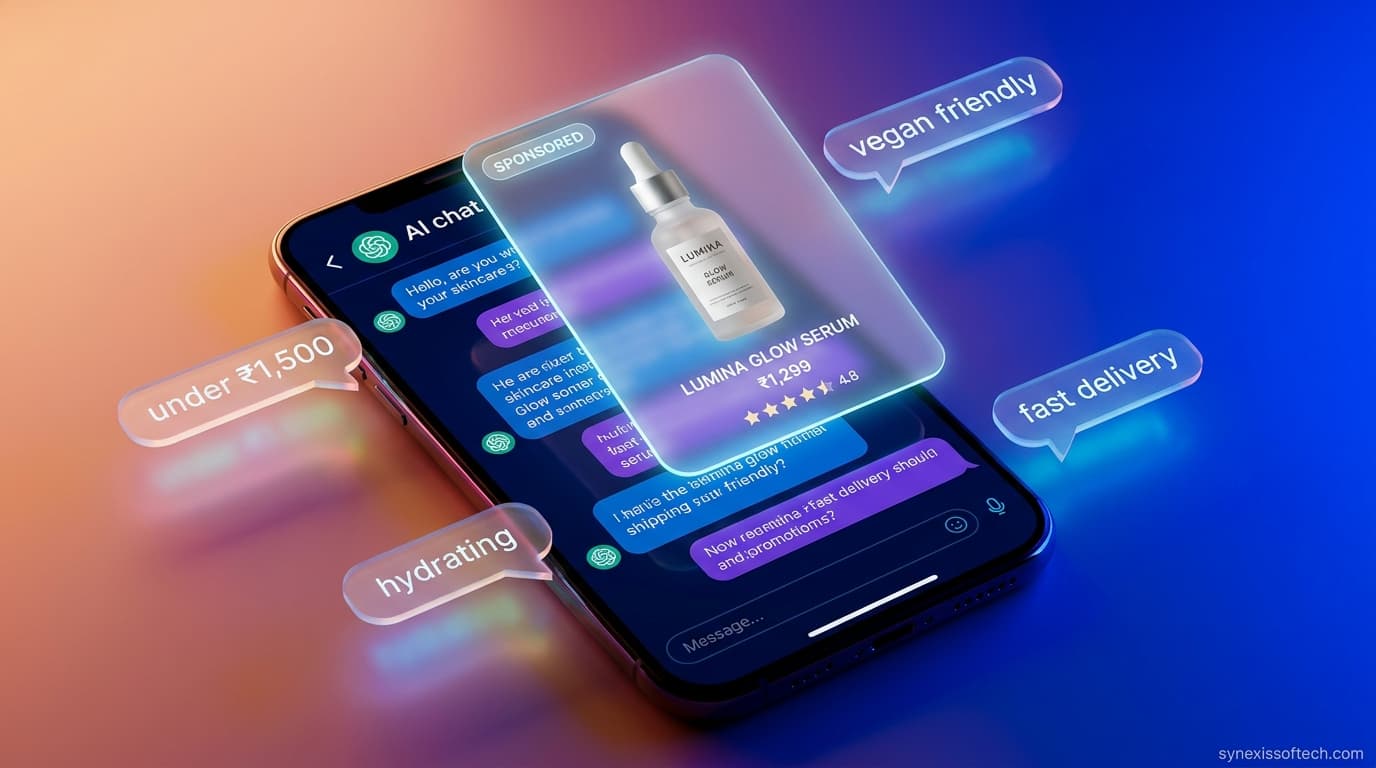
A user on the Free or Go tier has a conversation with ChatGPT. At moments where the context of the conversation is commercially relevant — a question about a product category, a request for a service recommendation, a comparison between options — an ad can appear. OpenAI describes these as "relevant, high-context moments."
The system supports CPC (cost-per-click) campaigns, CPM (cost-per-thousand-impressions) campaigns, and real-time bidding auctions. Conversion tracking uses a pixel-based system installed on the advertiser's website, similar in concept to tracking pixels used in Google and Meta campaigns.
Third-party sources, including Adsmurai, have reported CPC rates in the range of US$3 to US$5. These figures have not been officially confirmed by OpenAI and may vary by market, category, and competition.
The Shift: From Keywords to Conversational Intent
This is the most important strategic concept in ChatGPT Ads, and it is where most early analysis has been too shallow.
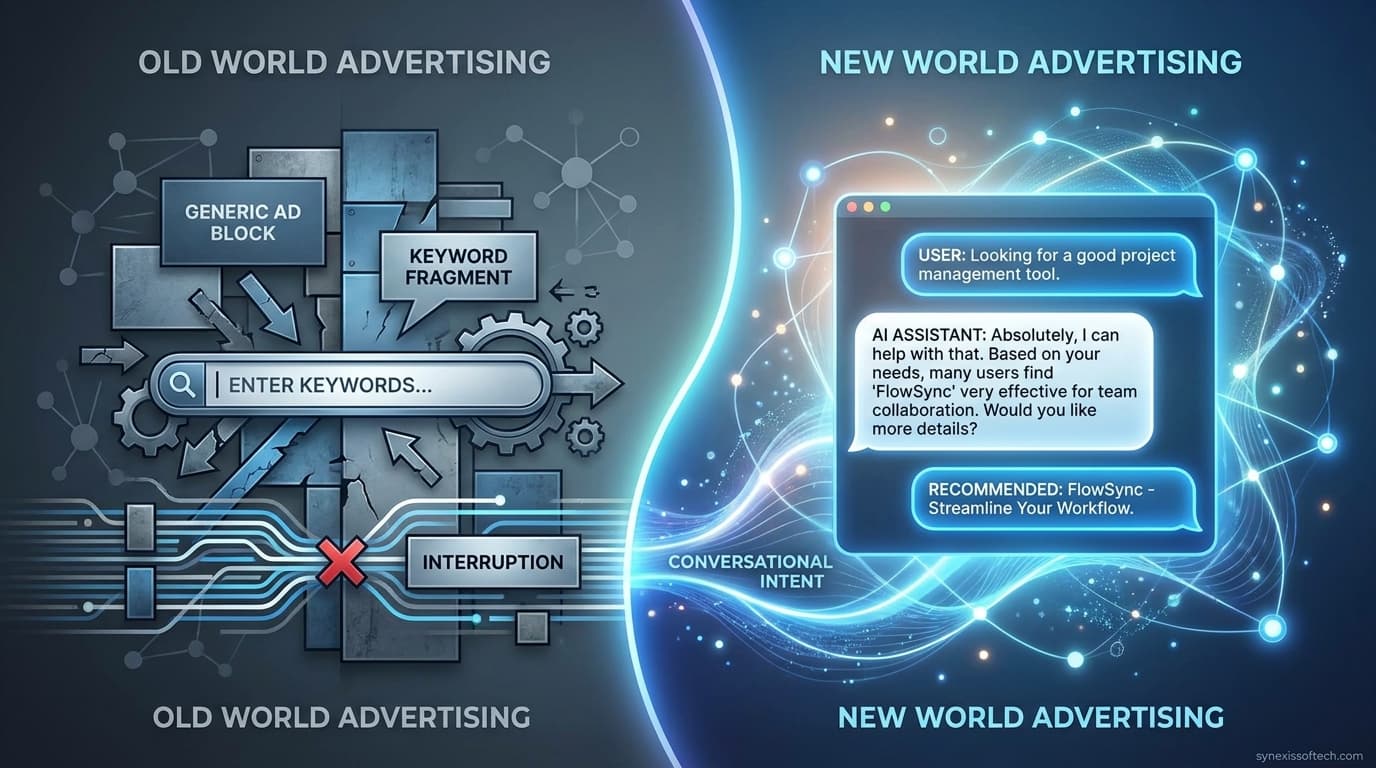
Traditional search advertising is built around a keyword:
"running shoes"
The advertiser bids on that keyword, the user clicks, and the advertiser hopes the landing page converts. The advertiser knows almost nothing about why the user searched, what they have already tried, what their constraints are, or how ready they are to buy.
A conversational query in ChatGPT looks different:
"I'm getting back into running after a knee injury. I need comfortable shoes for road running, preferably under $100, that I can buy online and receive within three days. I've tried Asics before and found them too narrow."
This single query tells an advertiser far more than a keyword ever could. The user has stated their budget, their constraint (injury recovery), their timeline (three days), their previous experience (Asics, too narrow), and their channel preference (online). An ad served into that context can, in principle, be far more relevant than one triggered by a two-word keyword.
This is what OpenAI calls the "context hints" model — ads served based on the meaning and intent of the conversation, not just a matched keyword.
Channel | Primary Intent | Discovery Model | Typical Context Known | Example |
|---|---|---|---|---|
Google Search | Active search | Keyword match | Query only | "best hotel Goa" |
Meta (Facebook/Instagram) | Passive discovery | Interest & behavioural targeting | Demographics, past behaviour | Scrolling feed, ad interrupts |
TikTok | Entertainment-led discovery | Engagement & content signals | Content preferences, age | Video ad between content |
ChatGPT | Problem-solving / research | Conversational context | Stated need, constraints, preferences, stage | "Find me a hotel in Goa under ₹3,000/night for a couple, with a pool, in November" |
ChatGPT does not replace Google or Meta. It introduces a new advertising environment with a different intent model. For businesses, the practical implication is that the same product or service may need different creative, different landing pages, and different measurement logic depending on which channel it is running on.
Why This Matters for E-Commerce
E-commerce brands have the most immediate reason to pay attention. Conversational queries about products are already common in ChatGPT, and they tend to be detailed: users describe what they want, compare options they have researched, and ask for recommendations they can act on immediately.
This makes the product data that an e-commerce business maintains — titles, descriptions, specifications, pricing, availability, reviews — directly relevant to whether an AI can understand, surface, and recommend that product in a conversation. Brands that have invested in clear, structured product information are better positioned than those that haven't.
Beyond the ad itself, the landing page matters more than ever. A user who clicks an ad from a conversational context has already described exactly what they want. A landing page that is generic, slow, or difficult to navigate will lose that user quickly. The gap between what the ad implies and what the page delivers is where most conversational ad campaigns will succeed or fail.
Why This Matters for Local Businesses
Restaurants, hotels, fashion retailers, education companies, travel agencies, and professional services all face a version of the same challenge: people are increasingly asking AI assistants for recommendations that used to come from Google Maps, Yelp, or a friend's suggestion.
A restaurant in Bangalore that has clear, up-to-date information about its menu, location, cuisine type, price range, and atmosphere is more likely to appear — whether organically in an AI recommendation or via a paid ad — than one with an outdated website and no structured data.
ChatGPT Ads create a paid channel into these conversations. But organic AI visibility — appearing in recommendations without paying — is equally important, and it starts with the same preparation: clean, accurate, structured business information.
Three Things That Are Not the Same — And Why the Distinction Matters
There is significant confusion in how ChatGPT Ads, AI search visibility, and GEO (Generative Engine Optimisation) are being discussed. These are related but distinct:
ChatGPT Ads: Paid placements within ChatGPT conversations. You pay for your business to appear in relevant moments. This is advertising.
AI Search Visibility / AI mentions: Your brand appearing organically in AI-generated answers — ChatGPT recommending your hotel, Perplexity citing your article, Google AI Overviews linking to your service page. This is not paid. Paying for ads does not guarantee organic AI mentions.
GEO — Generative Engine Optimisation: The discipline of improving how AI systems understand, trust, and cite your business content. This includes structured data, entity clarity, E-E-A-T signals, AI-readable page structure, and schema markup. It is the AI equivalent of SEO.
A business can run ChatGPT Ads and have poor AI visibility. A business can have strong organic AI visibility and run no paid ads at all. The most effective approach combines both — but they require different strategies and different investments.
What Businesses Need to Prepare
Whether you plan to advertise on ChatGPT now or simply want to be ready when access opens in your market, the preparation is the same. The following checklist applies to both paid and organic AI visibility:
1. Website quality and speed
A slow, mobile-unfriendly website will underperform in every channel. Fix core web vitals before spending on any form of advertising.
2. Clear product and service information
Every product or service should have a dedicated page with a clear title, description, specifications, pricing (where applicable), availability, and use cases. AI systems cannot recommend what they cannot understand.
3. Structured data (schema markup)
Schema markup helps search engines and AI systems understand what a page is about. Product schema, FAQ schema, LocalBusiness schema, and Review schema are all relevant depending on your business type.
4. Strong landing pages
An ad that reaches a high-intent user from a conversational context needs a landing page that matches that intent precisely. Generic homepages are not landing pages.
5. Accurate, structured business information
Name, address, phone, hours, categories, service areas — consistent and accurate everywhere: website, Google Business Profile, directories, and in the content of your pages.
6. Helpful, factual content
AI systems tend to cite sources that answer questions clearly and directly. FAQ pages, comparison articles, how-to guides, and detailed service explanations are the types of content that get cited.
7. Customer reviews and reputation
Review data is a signal that AI systems use when forming recommendations. A business with verified, recent reviews is more likely to be recommended than one without.
8. Conversion tracking
Before running any paid advertising, ensure your conversion tracking is working. ChatGPT Ads uses a pixel-based system. You cannot optimise what you cannot measure.
9. Clear brand positioning
In a conversational context, the question "what makes this brand different?" matters more than in keyword advertising. Users in a research conversation want to understand why one option is better than another for their specific situation.
10. AI visibility monitoring
Track whether your business is being mentioned or cited in AI-generated answers across ChatGPT, Perplexity, Google AI Overviews, and similar. This is now a measurable channel — treat it like one.
A New Strategic Question
The question that dominated the last decade of digital marketing was: "Does my business rank on Google?"
A parallel question is now relevant: "Can AI understand, trust, and recommend my business?"
These are not the same question. Ranking on Google requires SEO. Being recommended by AI requires a different set of signals — clear entities, factual content, structured data, authority, and consistency across sources. The businesses that ask this question now, and invest in the answer, will be better positioned than those who wait until the channel is mature.
30/60/90-Day Preparation Framework
First 30 days: Audit and fix the foundations
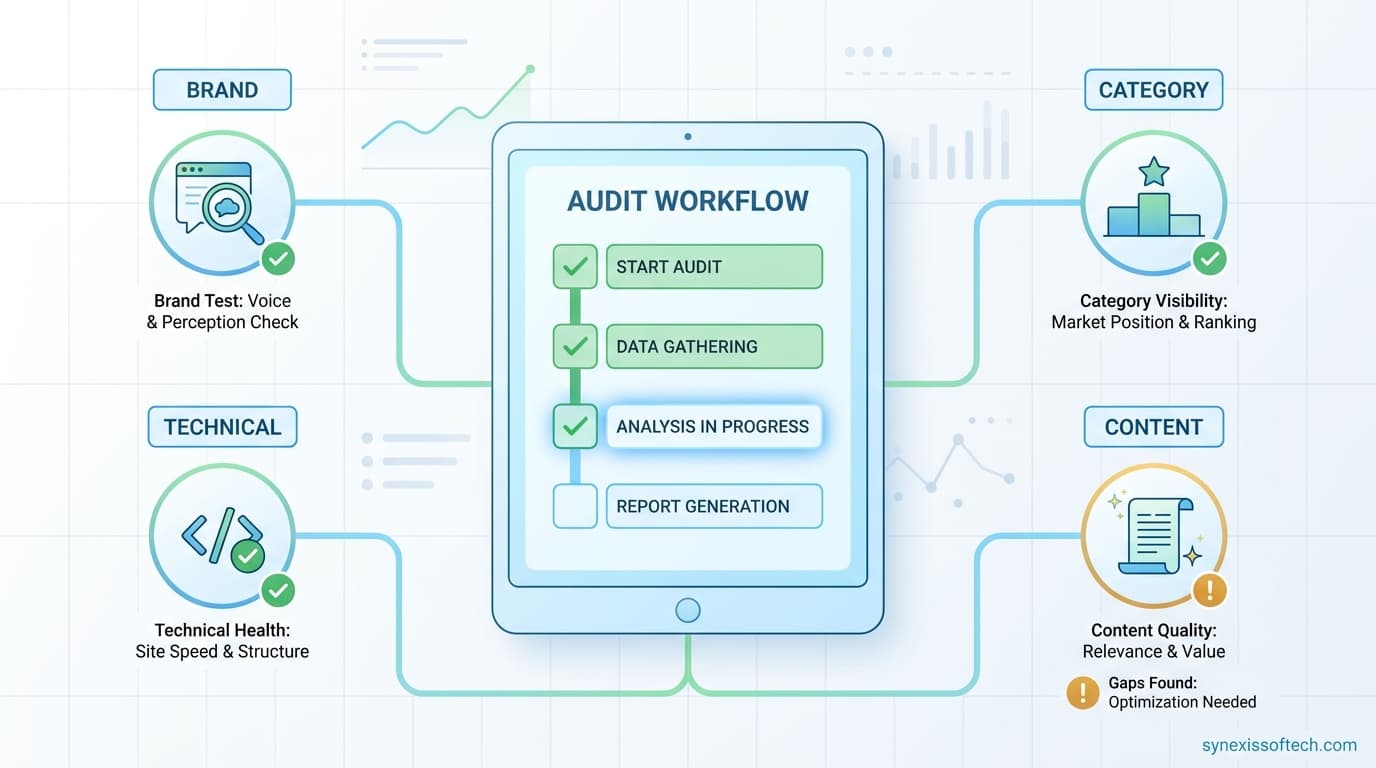
Audit website for speed, mobile experience, and technical errors
Review and update all product and service pages
Verify business information is accurate and consistent across all directories
Confirm conversion tracking is working correctly in Google Analytics and any ad platforms
Test your site in ChatGPT: ask it about your category and see what it knows and cites
60 days: Build authority and AI-readable content
Add FAQ sections to key pages using FAQPage schema
Publish comparison and how-to content targeting common customer questions
Implement Product, Review, and LocalBusiness schema where applicable
Begin a review acquisition strategy — more recent, verified reviews matter
Register with OpenAI's advertising waitlist or contact an authorised agency partner (WPP, Omnicom)
90 days: Experiment and measure
Run initial campaigns on ChatGPT Ads when access is available in your market
Monitor AI visibility across ChatGPT, Perplexity, and Google AI Overviews
Test landing pages specifically built for conversational intent
Track organic AI mentions alongside paid results — do not conflate them
Review and optimise based on cost-per-conversion, not just clicks
Can My Business Advertise on ChatGPT?
As of August 2026, direct self-serve access to ChatGPT Ads is available in a limited number of markets. Here is the current state:
United States, Canada, UK, Australia, New Zealand, Japan, South Korea: Advertising access available via OpenAI's agency partners (WPP, Omnicom) or direct contact with OpenAI's ads team.
India: Currently limited to approximately 50 invited brands. Self-serve Ad Manager expected in the following weeks, with a minimum daily budget of ₹725 (~$7.60).
Other markets: Not yet confirmed. Businesses in these markets should monitor OpenAI's official channels, prepare their digital infrastructure, and consider working with agency partners who have direct access.
OpenAI has not published a comprehensive advertising policy or category eligibility list publicly as of this writing. Businesses should verify current commercial terms and eligibility directly with OpenAI or an authorised partner before planning campaigns.
On Pricing
OpenAI has not published official CPC or CPM rates publicly. Third-party sources including Adsmurai have reported CPC in the range of $3–$5 per click. These figures should be treated as reported, not confirmed, and may vary significantly by market, category, and competition level.
The India Ad Manager minimum daily budget of ₹725 (~$7.60) has been reported by TechCrunch based on the August 27, 2026 announcement. Businesses should verify current commercial terms directly with OpenAI.
How Synexis Softech Can Help
Synexis Softech works with businesses on the technology infrastructure, AI solutions, and digital strategies that underpin both organic AI visibility and AI advertising readiness. This includes:
Technical audits of website structure, schema markup, and AI-readiness
AI agent development and automation for customer engagement
E-commerce platform development with AI-ready product data architecture
Custom software integrations for conversion tracking and analytics
GEO and AI visibility strategy
If your business is preparing for AI-driven discovery and advertising, Synexis Softech can assess your digital infrastructure and identify practical opportunities for AI, automation, and AI-ready customer experiences.
Suggested internal links:
Frequently Asked Questions
What are ChatGPT Ads?
ChatGPT Ads are paid advertisements that appear within ChatGPT conversations for users on the Free and Go tiers. They are served by OpenAI at relevant, high-context moments in a user's conversation — for example, when a user is asking about a product category or requesting a service recommendation.
How do ChatGPT Ads work?
ChatGPT Ads are served based on the context of a user's conversation — what OpenAI calls "context hints." Advertisers can run CPC or CPM campaigns through a real-time bidding system. Conversion tracking uses a pixel installed on the advertiser's website, similar to how Meta and Google Ads pixels work.
Which countries have ChatGPT Ads?
As of August 2026, confirmed markets include the United States (since February 2026), Canada, United Kingdom, Australia, New Zealand, Japan, South Korea, and India (from August 27, 2026). Other markets have not been officially confirmed.
Who can see ChatGPT Ads?
Only users on ChatGPT's Free and Go tiers see ads. Users on Plus, Pro, Business, and Enterprise plans are excluded from the current advertising rollout.
How much do ChatGPT Ads cost?
OpenAI has not published official pricing. Third-party sources have reported CPC rates of $3–$5 per click. These should be treated as reported, not confirmed. In India, the self-serve Ad Manager is expected to have a minimum daily budget of ₹725 (~$7.60). Businesses should verify current commercial terms directly with OpenAI.
Are ChatGPT Ads the same as Google Ads?
No. Google Ads target keywords — specific phrases a user typed. ChatGPT Ads target conversational context — the full intent of a user's conversation, including their stated needs, constraints, and preferences. They are different channels with different intent models, creative requirements, and measurement approaches. ChatGPT Ads complement, not replace, Google Ads.
What is AI search visibility (and how is it different from ChatGPT Ads)?
AI search visibility refers to a brand appearing organically in AI-generated answers — ChatGPT recommending your business, Perplexity citing your article, Google AI Overviews linking to your page. This is not paid advertising. Running ChatGPT Ads does not guarantee organic AI mentions. Both paid and organic AI visibility require separate strategies.
What is GEO (Generative Engine Optimisation)?
GEO is the practice of improving how AI systems understand, trust, and cite your business content. It involves structured data, entity clarity, factual and quotable content, E-E-A-T signals, and AI-readable page architecture. It is the AI equivalent of traditional SEO and is distinct from both paid advertising and conventional search engine optimisation.
How should businesses prepare for ChatGPT Ads?
The most important preparation steps are: (1) ensure your website is fast, mobile-friendly, and technically sound; (2) create clear, structured product and service pages; (3) implement schema markup; (4) build strong landing pages matched to buyer intent; (5) establish conversion tracking; (6) improve reviews and reputation signals; (7) monitor your AI visibility across major AI engines.
Which agencies manage ChatGPT Ads?
OpenAI has confirmed partnerships with WPP and Omnicom as authorised agency partners for ChatGPT Ads. Businesses seeking managed access to the platform in markets where self-serve tools are not yet available can work through these partners or contact OpenAI's ads team directly.
This article is based on verified reporting as of August 2026. The ChatGPT Ads platform is actively evolving. Businesses should verify current eligibility, pricing, and market availability directly with OpenAI before making advertising decisions.
Need help with implementation? Synexis Softech provides robust custom website development services to help scale your business.
Synexis Softech Team
Marketing Manager
Our team of experienced engineers and digital strategists at Synexis Softech specializes in building production-ready AI solutions, high-performance web applications, and data-driven marketing campaigns. Based in Pokhara, Nepal, we partner with growing businesses globally to turn complex technical challenges into competitive advantages.
Ready to grow your business with technology?
Let's build a practical digital solution for your business.
Talk to Our Team